New Jersey Removes Dozens of Deer From Restricted Park Area Amid Safety and Starvation Concerns
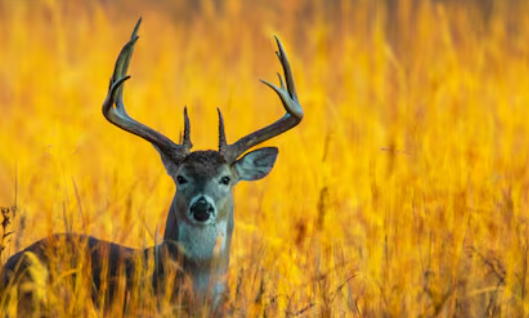
A recent operation in New Jersey has drawn public attention after state officials confirmed that 94 deer were killed inside a restricted section of Liberty State Park in Jersey City. The controlled action, carried out over five days starting March 30, was ordered by the state to address serious environmental and animal welfare concerns in an area that has long been closed to visitors.
According to officials from the New Jersey Department of Environmental Protection, the deer were located within a 200-acre fenced-off portion of the park that remains inaccessible due to ongoing cleanup efforts. The land has been under remediation for contamination involving hazardous substances such as lead and arsenic. Because of this, the area is not open to the public and has limited natural resources available for wildlife.
State authorities explained that the removal of trees and vegetation during the cleanup process left the deer without adequate food sources. As a result, many of the animals were reportedly struggling to survive. Officials described the situation as one where the deer were effectively starving, making intervention necessary.
Wildlife specialists from the U.S. Department of Agriculture carried out the operation using rifles equipped with noise-suppression technology to minimize disruption. The work was conducted during hours when the park was closed, and officials emphasized that the process was handled in a controlled and humane manner.
Although deer hunting is not unusual in New Jersey, this particular operation attracted attention due to its location. Liberty State Park sits near one of the most recognizable urban landscapes in the country, close to the Statue of Liberty and across from the Manhattan skyline. The setting, combined with the scale of the cull, led to public concern and criticism.
Some community voices argued that there should have been more transparency before the operation began. Local advocates noted that unlike rural or suburban areas where deer management is more common, such actions in a densely populated urban environment can come as a surprise to residents and park visitors.
State officials defended the decision, stating that relocating the deer was not an option due to strict regulations. Concerns about the potential spread of disease and the stress relocation can place on wildlife were cited as key reasons behind the decision to proceed with the cull instead.
Authorities also confirmed that not all deer in the broader park were affected. The operation targeted only those within the fenced and contaminated section. Deer are still occasionally seen in other accessible areas of Liberty State Park, particularly near the Nature Center.
Efforts are ongoing to maintain the fencing around the restricted zone to prevent additional deer from entering. However, officials acknowledged that some animals may still find ways into the area, leaving open the possibility of future management actions if conditions do not improve.
The situation highlights the challenges of balancing wildlife management with environmental restoration in highly urbanized regions. New Jersey, known as one of the most densely populated states in the U.S., frequently faces such issues as development and natural habitats continue to overlap.
Discussions around deer management are not limited to this case. Across the state, similar concerns have led to public meetings and legal discussions about how best to handle wildlife in both protected and residential areas. The Liberty State Park operation is now part of a broader conversation about how authorities manage animal populations while addressing environmental safety and public expectations.
Sources:
New Jersey Department of Environmental Protection
U.S. Department of Agriculture