
Two Full Moons in May 2026 to Brighten the Night Sky, Ending with a Rare Month-End Blue Moon
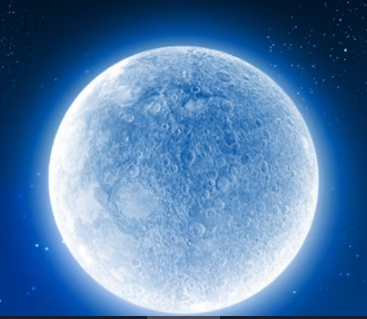
May 2026 is expected to offer skywatchers a special lunar experience, as two full moons will appear within the same calendar month. The event is drawing attention from astronomers and space enthusiasts because such occurrences are not very common and are often referred to as a “blue moon” situation in astronomy.
The month will begin with the first full moon, commonly known as the “Flower Moon,” which will reach its peak brightness on May 1, 2026. This early-May full moon traditionally gets its name from seasonal changes in spring, when flowers begin to bloom in many parts of the Northern Hemisphere. It will appear bright and full in the night sky, marking the start of a month that will be closely watched by astronomy lovers.
Later in the same month, on May 31, 2026, a second full moon will occur. This second full moon is what astronomers refer to as a “blue moon.” Despite the name, it does not actually appear blue in color. Instead, it will look like a normal full moon, glowing in shades of white, yellow, or soft orange depending on atmospheric conditions and its position in the sky.
The term “blue moon” is used when two full moons occur within a single calendar month. This happens because the lunar cycle is about 29.5 days long, which occasionally allows a month with 30 or 31 days to include two full moons. While the phrase is widely used in popular culture to describe rare events, in astronomy it simply refers to this timing pattern rather than any change in the moon’s appearance.
Experts note that blue moons typically occur once every two to three years. This makes the May 2026 event relatively uncommon but not extremely rare. It is part of a natural cycle that continues to repeat due to the relationship between the lunar orbit and the structure of the calendar.
After this event in May 2026, the next similar occurrence is expected toward the end of 2028, followed by another in 2031, according to established astronomical predictions.
Throughout the rest of 2026, several other full moons will also take place, each traditionally carrying its own seasonal name. These include the Strawberry Moon in June, Buck Moon in July, and Harvest Moon in September. Later in the year, November and December are also expected to feature supermoons, which appear slightly larger and brighter due to their closer position to Earth.
The upcoming double full moon event in May is expected to attract attention from both casual observers and astronomy enthusiasts. Clear skies will offer the best viewing conditions, especially during moonrise when the lunar surface often appears warmer in color.
As interest in space and natural phenomena continues to grow, such lunar events provide an opportunity for people to connect with the night sky and observe patterns that have been tracked for centuries.
Sources:
EarthSky astronomical data
NASA lunar cycle and moon phase information