Trump’s Inner Circle Dominates TIME 100 List While Key Figures Miss Out
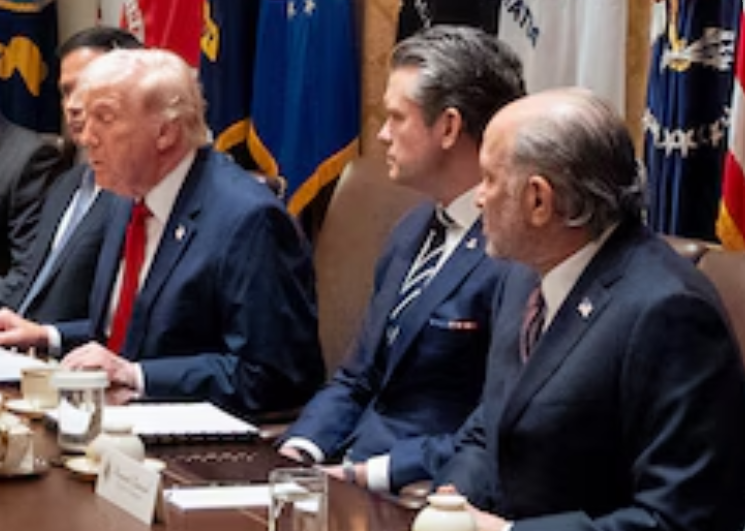
President Donald Trump and several of his closest allies have secured spots on TIME magazine’s 2026 list of the world’s most influential people, highlighting the growing impact of his political network both in the United States and globally. The annual TIME 100 list, released this week, recognizes individuals shaping major developments across politics, business, and global affairs.
This year’s list includes Trump alongside key figures from his administration, such as Secretary of State Marco Rubio, special envoy to the Middle East Steve Witkoff, White House Chief of Staff Susie Wiles, and Chairman of the Joint Chiefs of Staff Dan Caine. However, notable omissions from the list include Vice President JD Vance and Defense Secretary Pete Hegseth, raising questions about influence and visibility within the administration.
TIME’s profile of Donald Trump emphasizes his continued dominance in global politics, noting that his actions have significantly influenced international relations, economic policies, and military strategies. Over the past year, Trump has introduced major policy changes, including a sweeping tax overhaul and the imposition of tariffs on multiple countries. His administration has also pursued a strict immigration agenda, deploying enforcement measures in major U.S. cities.
On the global stage, Trump’s decisions have extended to military operations and foreign interventions. These include actions targeting Iranian nuclear facilities, involvement in conflicts with Tehran, and operations in regions such as Venezuela and the Caribbean. According to TIME, these moves reflect a leadership style that is reshaping global power dynamics and redefining traditional approaches to governance.
Marco Rubio’s inclusion on the list reflects his transformation from a former political rival of Trump into one of his most trusted allies. Holding dual roles as Secretary of State and National Security Adviser, Rubio has become central to several major foreign policy decisions. His involvement spans key global issues, including tensions with Iran, the ongoing Russia-Ukraine conflict, and diplomatic negotiations related to trade and immigration. His current position places him at the core of the administration’s strategic direction, while also tying his political future closely to Trump’s legacy.
Steve Witkoff has also gained recognition for his role in high-stakes international negotiations. As a longtime associate of Trump, he has been entrusted with handling some of the administration’s most complex diplomatic efforts. His work includes contributing to a cease-fire agreement between Israel and Hamas and facilitating the release of American detainee Marc Fogel from Russia. Despite these achievements, challenges remain, particularly in efforts to resolve the conflict in Ukraine and ongoing tensions with Iran.
Susie Wiles stands out as one of the most influential figures within the White House, despite not holding an elected position. As Chief of Staff, she plays a central role in managing internal operations and advising the president on critical decisions. Her leadership has brought a level of structure and discipline to an administration often marked by internal divisions. Even while undergoing treatment for breast cancer, Wiles has continued in her role, underscoring her importance within Trump’s inner circle.
Dan Caine’s rise to prominence reflects his growing influence in military strategy and national security decisions. As Chairman of the Joint Chiefs of Staff, he has been closely involved in key military operations, including strikes on Iranian targets and missions in Venezuela. His appointment, considered unconventional at the time, has been reinforced by a series of high-profile operations that have strengthened Trump’s confidence in his leadership.
While the inclusion of these figures highlights the strength and reach of Trump’s immediate circle, the absence of other senior officials suggests a distinction between formal titles and actual influence. TIME’s selections appear to focus on individuals who are actively shaping outcomes rather than those simply holding prominent positions.
Overall, the 2026 TIME 100 list reflects the continued centralization of influence around Donald Trump and a select group of trusted advisers. Their roles in shaping domestic policies and international relations have placed them at the forefront of global attention, signaling that their decisions will likely continue to impact political and geopolitical developments in the years ahead.
Sources:
TIME Magazine
U.S. Department of State
The White House
U.S. Department of Defense