
Strathmere Could End Its Free-Beach Tradition as Upper Township Weighs New Access Fees
For generations, visitors to Strathmere have been able to enjoy the Jersey Shore without paying a beach tag. That could soon change.
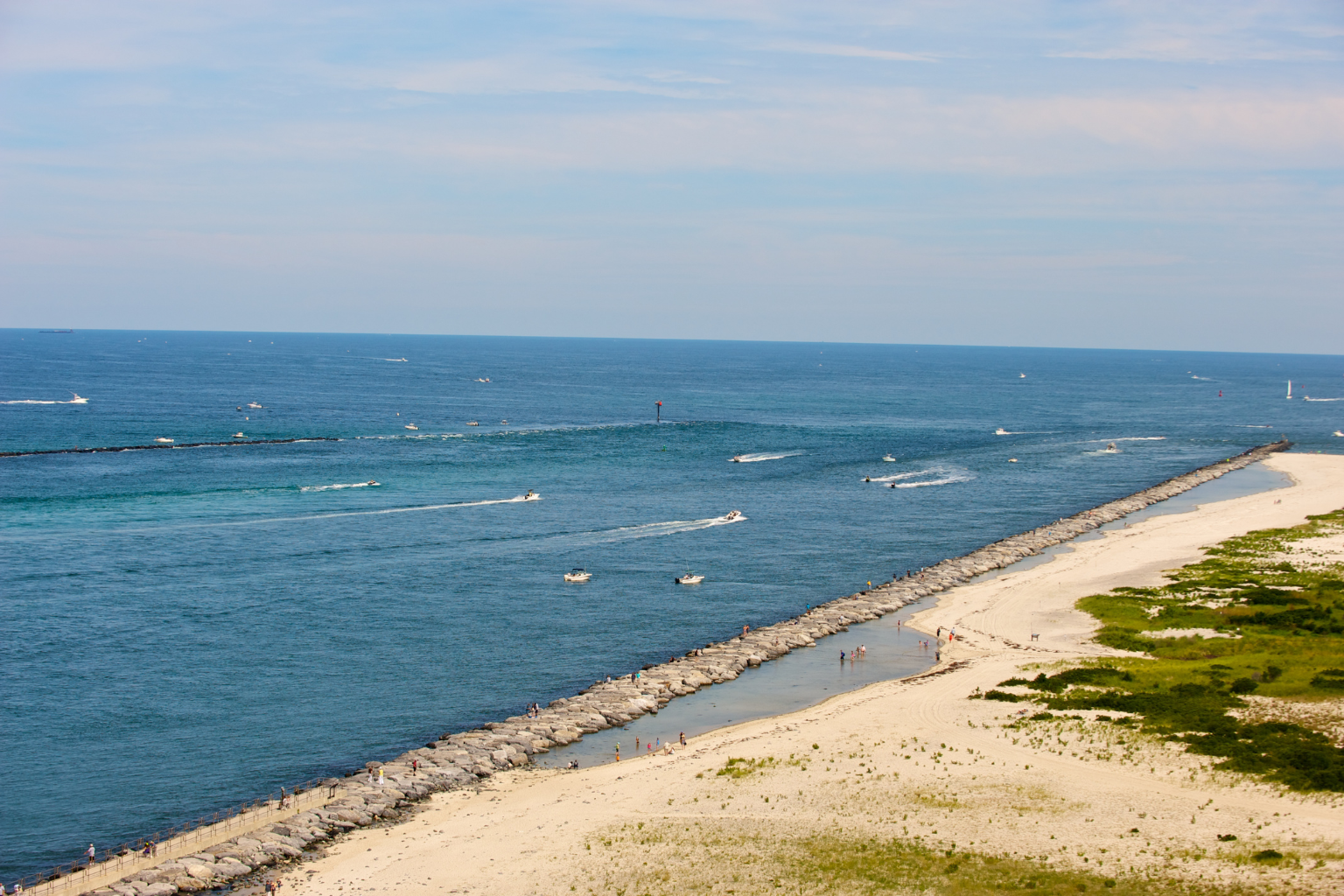
Upper Township officials are moving forward with a proposal that would introduce beach tags in Strathmere beginning with the 2027 summer season. If the plan is ultimately approved, beachgoers age 16 and older would have to pay for access to the shoreline between Corson’s Inlet and Whale Beach.
The proposal would make Strathmere one of the latest Jersey Shore communities to shift from free beach access to a fee-based system. For many visitors, the change would be relatively small in dollar terms. For long-time residents and regular beachgoers, however, the issue is about more than the price of a tag.
It raises a bigger question: Should a beach that has remained free for decades continue that tradition, or should visitors help pay for the growing cost of maintaining it?
Under the proposed fee structure, a daily beach tag would cost $10, while a weekly tag would cost $20. A seasonal tag would be priced at $45. People who purchase a seasonal tag during the preseason period would be able to get it for $30.
Veterans and members of the armed forces, along with one guest for each eligible person, would be exempt from the proposed beach-tag fees.
The plan is expected to bring in roughly $320,000 to $340,000 annually, according to township officials. That money would be used for expenses connected with operating and maintaining the shoreline.
Strathmere currently stands out because visitors can use its beaches without buying a badge, while street parking is also free. Upper Township officials say that combination has become increasingly expensive to maintain as the cost of lifeguards, beach operations and erosion-related work continues to rise.
Township Administrator James Van Zlike said the township has spent more than $513,000 in 2026 on beach-related services, including lifeguard wages and pensions. The township is also responsible for about $2.1 million in matching funds connected with the current beach replenishment project.
Those numbers are at the heart of the township’s argument for introducing fees.
The proposal is not simply about collecting money from summer visitors. Officials have also been looking at whether charging for parking would be a better way to raise revenue. They concluded that installing parking meters and creating a larger parking-enforcement system in Strathmere would be more complicated and expensive because of the community’s narrow streets.
The beach-tag approach would allow the township to collect revenue without fundamentally changing the way parking works in the community.
Mayor Curtis Corson has argued that the proposed fee would help spread the cost of maintaining Strathmere’s beaches among the people who use them. He has also suggested that the proposed seasonal price may actually be low compared with the value of the beach and the costs involved in maintaining it.
That argument has not convinced everyone.
Strathmere residents and regular visitors have expressed sharply different opinions about the proposal. Supporters say the township’s taxpayers should not be left responsible for the entire cost of a beach that attracts visitors from outside the community.
They also point to rising expenses for lifeguards, beach maintenance and erosion control. From that perspective, a beach tag provides a direct way for beach users to contribute toward those costs rather than relying entirely on local tax revenue.
Opponents see the issue differently.
For them, the appeal of Strathmere has always included its relatively simple, less commercial character. Visitors can arrive, park nearby and walk onto the beach without first stopping at a booth or purchasing a badge.
Some residents worry that introducing a fee could make Strathmere less attractive to families and visitors who have traditionally chosen the community because beach access was free.
There are also concerns about community events and local traditions. Critics say even a relatively modest fee could discourage some visitors from taking part in activities that have long been part of Strathmere’s summer culture.
The debate also involves a practical question about who should pay.
New Jersey’s coastal communities have long used beach fees to help finance lifeguards, beach maintenance and other shoreline-related expenses. State rules also recognise public access to tidal waters while allowing municipalities to manage and maintain their beaches under applicable laws and regulations.
New Jersey’s Public Trust Doctrine remains an important part of that framework. The state Department of Environmental Protection says the doctrine protects the public’s right to access and use tidal waterways and adjacent shorelines. A beach tag, therefore, is not the same thing as turning a public shoreline into private property. It is a local fee connected with the management and use of the beach.
Strathmere’s situation is particularly notable because the community has remained free while many nearby shore towns charge beach fees.
Ocean City and Sea Isle City, for example, already use beach tags. Other Jersey Shore communities have different pricing systems, with some charging daily visitors, others offering weekly or seasonal passes, and some providing exemptions or reduced rates for specific groups.
If Upper Township adopts the proposal, Strathmere would join that much larger group.
The township’s current beach conditions also help explain why officials are focused on shoreline expenses.
Beach erosion is a recurring problem along New Jersey’s coast, and Strathmere is no exception. The U.S. Army Corps of Engineers has been working with state and local partners on a major beachfill project covering Sea Isle City and Strathmere.
In April, the Army Corps announced a $21.6 million contract for the project. The work involves placing large quantities of sand along the shoreline as part of an effort to maintain the beach and reduce coastal storm risks. The federal agency has said the project includes about 1.86 million cubic yards of sand, with a substantial portion designated for the Strathmere section of Upper Township.
The Army Corps’ coastal storm-risk information lists periodic nourishment work in Strathmere and Sea Isle City, with completion estimated for September 2026.
That work illustrates why beach maintenance can become a significant financial responsibility for coastal communities. Sand replenishment is not a one-time expense. Beaches naturally change because of waves, storms, currents and erosion, meaning communities must repeatedly invest in shoreline protection and maintenance.
For Upper Township, the proposed beach tags would provide a new source of revenue at a time when those expenses are becoming more difficult to ignore.
Still, the proposed fees would not necessarily cover every cost associated with the beach.
If the program produces approximately $320,000 annually, that amount would represent only part of the township’s overall beach-related spending. Officials therefore view the tags as a way to offset some costs rather than a complete solution to the financial demands of operating Strathmere’s shoreline.
The proposal also has a history.
Upper Township considered a beach tag programme in 2021, when officials were dealing with increased crowds and parking concerns in Strathmere. The idea did not ultimately become a permanent requirement at that time.
The issue has now returned as the township faces a different financial environment and higher costs associated with beach operations and erosion control.
The current proposal is not yet the same as a final decision to charge visitors.
Township officials are expected to move through the municipal ordinance process before the programme can take effect. Upper Township’s 2026 meeting schedule lists Aug. 24 as a future township committee meeting, following earlier discussions of the proposal in July and August.
If the ordinance is approved after the required process, the new system would apply to the 2027 beach season rather than the remainder of the current summer.
That means Strathmere remains free for beachgoers during the 2026 season under the township’s current beach rules.
The change, if adopted, would also give visitors time to prepare for the new system and learn how tags would be purchased and enforced. Township officials have discussed the possibility of offering both physical and digital tags, although the final system would depend on the ordinance and implementation decisions.
For now, the proposal leaves Strathmere at a crossroads.
One side sees beach tags as a reasonable way to share the cost of maintaining a heavily used public resource. The other sees the fees as a change to one of the community’s defining qualities.
Either way, the debate reflects a larger challenge facing coastal communities across New Jersey: keeping beaches accessible while paying for the increasingly expensive work required to protect, maintain and operate them.
For visitors who have always known Strathmere as a free beach, the proposed $10 daily fee or $45 seasonal price could mark the end of a familiar Jersey Shore tradition. For Upper Township officials, however, the proposed programme is being presented as a way to make the financial burden of maintaining that tradition more sustainable.
The final decision will determine whether Strathmere enters the 2027 summer season with beach tags for the first time or remains one of New Jersey’s increasingly uncommon free oceanfront destinations.
Sources
Upper Township, New Jersey — official beach information and municipal meeting records.
New Jersey Department of Environmental Protection — official public-access information and coastal regulations.
U.S. Army Corps of Engineers, Philadelphia District — official information on the Strathmere and Sea Isle City beachfill project.
New Jersey Department of State — official municipal ordinance and state law information.