Prosecutors Decline to Pursue Case Against Former NFL Star Marcellus Wiley
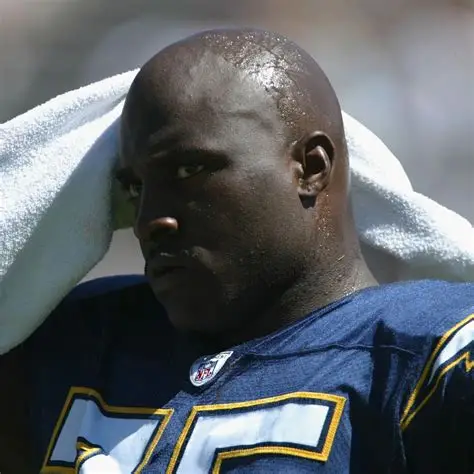
The domestic violence case involving former NFL player and sports broadcaster Marcellus Wiley has taken a significant turn, with prosecutors in Orange County, Florida, deciding not to move forward with criminal charges stemming from his July arrest.
Wiley, 51, was arrested on July 4 after an incident involving his estranged wife, Annemarie Wiley, at a hotel in the Orlando area. The arrest initially drew attention because of allegations that he had physically confronted her and threatened her during a family trip. Wiley denied the allegations at the time.
Now, according to court documents reviewed by TMZ, prosecutors have declined to file charges in the case. The documents state that the testimony available to prosecutors was not supported by physical or other independent evidence and was therefore considered insufficient to obtain a conviction.
The decision means Wiley will not face criminal prosecution over the specific domestic battery allegation that led to his arrest. It is important to distinguish that decision from a finding that the underlying events did or did not happen. Prosecutors declining to file charges means the state chose not to pursue a criminal case based on the evidence available to it.
The case began during a family trip to Orlando around the Fourth of July holiday. Wiley and his family were staying at the World Center Marriott while in the area for a basketball tournament. According to the arrest report, deputies were called to the hotel after Annemarie contacted authorities.
Annemarie told police that Wiley had threatened to kill her and alleged that he had physically touched her during an incident the previous day. She described an encounter in which she said Wiley stood over her and poked her in the cheek with one finger. She also told authorities that she was afraid of him.
The allegations were disputed by Wiley from the beginning.
When questioned by deputies, Wiley said there had been no physical altercation between him and his wife. He also showed officers text messages that he said reflected normal and cordial communication between the two.
Investigators noted that there were no visible injuries reported in the arrest documents, and the alleged incident did not result in a request for medical treatment. The circumstances described in the police report later became important in assessing whether the available evidence was strong enough to support a criminal prosecution.
Wiley was taken into custody on July 4 and was later released after posting a $1,000 bond. The arrest initially placed the former NFL defensive lineman at the centre of a developing legal story, but the latest prosecutorial decision changes the status of the criminal case.
Wiley has consistently denied the domestic violence allegations. After his arrest, he released a public statement saying he could not fully address the matter while it was part of a legal proceeding but insisted that the allegations against him were untrue. He said his main concern was protecting his children, who had been affected by the situation.
The latest decision from prosecutors does not, however, end every legal dispute involving Wiley and Annemarie.
The couple’s relationship has also become the subject of divorce proceedings. Annemarie filed for divorce shortly after the July incident and sought a domestic violence restraining order. She made additional allegations concerning her marriage to Wiley, including claims of a broader pattern of abusive behaviour.
Wiley has denied those allegations as well.
Those matters are separate from the criminal domestic battery case that prosecutors have now decided not to pursue. A decision not to file criminal charges over one incident does not automatically resolve separate civil proceedings, divorce matters or other allegations.
For readers following the story, that distinction is important. A criminal case requires prosecutors to determine whether the available evidence is sufficient to meet the legal standard needed for a conviction. In Wiley’s case, prosecutors said the evidence available to them was not sufficiently corroborated by physical or other evidence.
That does not amount to a criminal conviction, acquittal or judicial determination that either side’s broader account of the marriage is true. Instead, it means the prosecution will not proceed with the particular criminal allegation that resulted in Wiley’s arrest.
Wiley’s legal troubles have attracted considerable attention because of his public profile. Before becoming a familiar face in sports media, he spent 10 seasons in the NFL after being selected by the Buffalo Bills in the second round of the 1997 NFL Draft out of Columbia University.
He later played for the San Diego Chargers, Dallas Cowboys and Jacksonville Jaguars. His strongest NFL season came in 2001 with the Chargers, when he recorded 13 sacks and earned second-team All-Pro recognition. He finished his career with 147 regular-season games, 321 tackles, 44 sacks and 13 forced fumbles.
After leaving football, Wiley moved into sports broadcasting and became a recognisable television and radio personality. He worked with ESPN and later Fox Sports, continuing to build a career around football analysis and sports commentary.
That public background made the July arrest particularly notable, but the latest development shifts the focus from the arrest itself to the evidence behind the case.
The prosecutor’s decision is also a reminder of why an arrest should not be treated as proof of guilt. An arrest indicates that law enforcement took someone into custody based on an alleged offence and the circumstances known to investigators at the time. Whether criminal charges are ultimately filed depends on the prosecutor’s assessment of the evidence and applicable law.
In Wiley’s case, prosecutors have now determined that they will not pursue the domestic violence matter. The stated reason was that the testimonial evidence was not corroborated by physical or other evidence strongly enough to support a conviction.
For Wiley, the decision removes the immediate threat of criminal prosecution over the July incident. For Annemarie, the decision does not necessarily resolve the separate family and civil matters that have emerged since the arrest.
The broader dispute between the estranged couple therefore remains separate from the criminal case. Any future developments involving their divorce, restraining-order proceedings or other legal claims would have to be evaluated independently and should not be assumed to have been resolved by the prosecutor’s decision.
For now, the key development is clear: the domestic battery case arising from Wiley’s July 4 arrest in Florida will not move forward as a criminal prosecution. Prosecutors cited a lack of sufficient corroborating evidence, while Wiley continues to deny the allegations that led to his arrest.
Sources
- Orange County, Florida, court documents
- Orange County Sheriff’s Office
- Orange County Corrections Department
- TMZ, August 10, 2026
- Los Angeles Times, July 6, 2026
- NBC Sports / Pro Football Talk, July 6, 2026