
Bryan Kohberger’s Idaho Murder Case Takes a New Turn as He Challenges His Guilty Plea
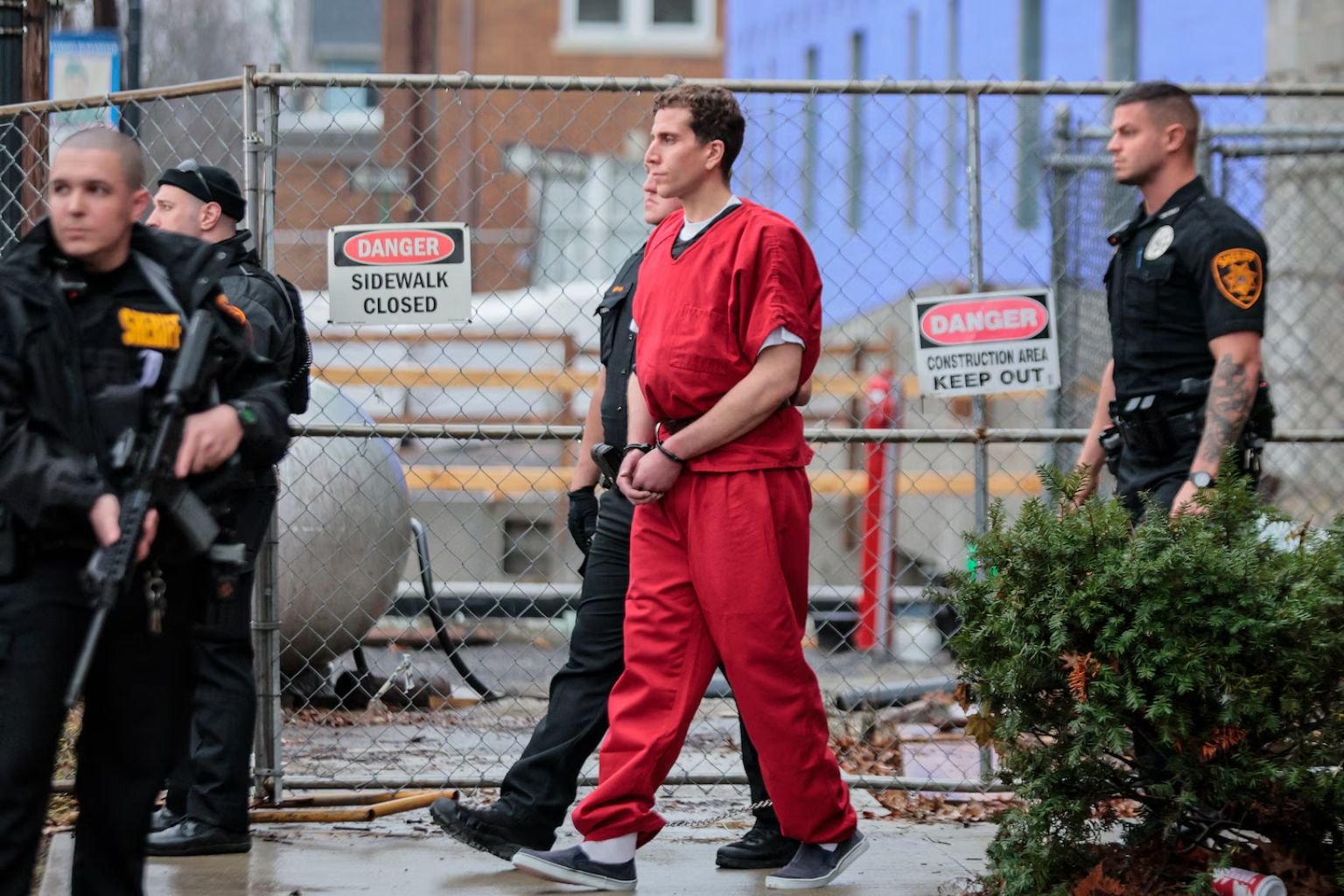
Bryan Kohberger remains behind bars in Idaho, but his legal case has taken an unexpected turn more than a year after he admitted responsibility for the killings of four University of Idaho students.
Kohberger, 31, is currently being held at the Idaho Maximum Security Institution in Kuna. Records from the Idaho Department of Correction list him as in custody and show four life sentences connected to the murders. His sentence also includes a 10-year term for burglary. The life sentences are fixed and consecutive, meaning he is not eligible for parole under the sentence imposed in 2025.
His imprisonment, however, has not ended the legal battle surrounding the case.
In July 2026, Kohberger filed a petition for post-conviction relief and began seeking to undo the guilty plea that brought the prosecution to an end. He has now publicly claimed that he is innocent and argues that problems surrounding his defence and the plea negotiations prevented him from receiving a fair opportunity to challenge the case at trial.
The development is significant because Kohberger previously admitted in court that he was guilty of killing Madison Mogen, Kaylee Goncalves, Xana Kernodle and Ethan Chapin. His guilty plea in July 2025 eliminated the need for a murder trial and brought an end to a case that had drawn national attention for more than two years.
The four students were killed on Nov. 13, 2022, at a rental home near the University of Idaho campus in Moscow, Idaho. The victims were found after an attack that investigators said involved multiple victims inside the house.
Kohberger was a doctoral student at Washington State University at the time of the killings. Investigators eventually connected him to the case, and he was arrested in Pennsylvania on Dec. 30, 2022. Idaho State Police says the case involved a lengthy investigation involving local, state and federal law enforcement agencies.
The investigation also became notable for its use of investigative genetic genealogy. Idaho Attorney General Raúl Labrador’s office said the technique played an important role in identifying Kohberger as a suspect and later defended its use in court. The Idaho Attorney General’s Office described the method as a significant legal issue because it was the first time the technique had been used in Idaho.
The case was originally headed toward a capital murder trial. Prosecutors had sought the death penalty, while Kohberger’s defence team challenged several aspects of the prosecution and the state’s case.
That changed in 2025.
On July 2, 2025, Kohberger entered guilty pleas to four counts of first-degree murder and one count of felony burglary. Under the agreement, he accepted consecutive life sentences without the possibility of parole and agreed not to appeal the convictions. In exchange, prosecutors removed the possibility of a death sentence.
At his sentencing hearing later that month, the court imposed four consecutive fixed life terms for the killings. He also received a fixed 10-year sentence for burglary. The Idaho Attorney General’s Office confirmed that the sentences were designed to keep Kohberger in prison for the rest of his life.
For many people following the case, that appeared to be the final chapter. There would be no jury trial, no lengthy presentation of evidence in open court and no separate penalty phase.
Instead, the case has returned to the legal system through Kohberger’s effort to challenge the plea.
In his recent statements, Kohberger has said he wants to withdraw his guilty plea and eventually enter a not-guilty plea. He has argued that he was influenced by what he describes as false promises and misleading information during the plea process. He has also accused his former defence lawyers of improperly persuading him to admit guilt.
Those are allegations made by Kohberger, not findings that a court has established as fact.
His petition is therefore not the same thing as having his conviction overturned. A request for post-conviction relief begins another legal process in which the court must determine whether there is a valid basis for changing what happened in the original case.
The timing has also brought renewed attention to the evidence and legal arguments surrounding the prosecution.
During the original investigation, authorities relied on a combination of evidence and investigative work, including DNA evidence, surveillance information and other records developed during the investigation. Idaho State Police says Kohberger was ultimately charged with four counts of first-degree murder and felony burglary and that the case was fully adjudicated following his guilty plea and sentencing in July 2025.
Kohberger’s new claims do not erase those earlier court proceedings. His guilty plea remains part of the official record unless a court grants his request for post-conviction relief or otherwise changes the judgement.
Another important development came in early August 2026, when a new attorney was assigned to represent Kohberger in connection with his effort to obtain post-conviction relief. The appointment gives the case a new legal direction as his request moves through the court system.
The new legal fight could take time. Kohberger would have to overcome the consequences of his previous guilty plea and sentencing before a new trial could become a realistic possibility. The court will have to examine the arguments raised in his petition and determine whether the legal requirements for post-conviction relief have been met.
That distinction matters because a person who simply changes his mind after entering a guilty plea does not automatically receive a new trial. Courts generally examine whether there were legally significant problems with the plea, the defendant’s representation or other parts of the proceedings before granting such relief.
The Idaho case is also different from an ordinary appeal because Kohberger agreed as part of his plea arrangement to give up his right to appeal. His current effort is instead proceeding through post-conviction legal channels.
The victims’ families have continued to face the emotional impact of the case as Kohberger’s legal challenge brings the killings back into public attention.
Madison Mogen, Kaylee Goncalves, Xana Kernodle and Ethan Chapin were young University of Idaho students whose deaths shocked the Moscow community and drew national attention. Idaho officials have repeatedly emphasised that the families remain at the centre of the tragedy.
Kohberger’s original decision to plead guilty meant that the families did not have to endure a lengthy murder trial. His latest legal challenge could reopen some of the questions that many believed had been settled by the 2025 plea and sentencing.
The case also continues to generate questions about motive. Kohberger never publicly provided a detailed explanation for why the four students were targeted when he entered his guilty plea. The absence of a clear motive has remained one of the unanswered aspects of the case.
However, a lack of a publicly stated motive does not change the legal status of his conviction. Kohberger admitted guilt in court, was sentenced by an Idaho judge and remains imprisoned under those sentences.
As of Aug. 8, 2026, Kohberger is therefore not a free man and has not received a new trial. He remains incarcerated at the Idaho Maximum Security Institution while his post-conviction challenge moves forward.
The most important question now is not whether Kohberger has already been released — he has not — but whether an Idaho court will find sufficient legal grounds to disturb the guilty plea and the convictions that followed it.
For now, the answer remains unresolved.
What is clear is that the Idaho student murders case, which appeared to have reached its conclusion with Kohberger’s 2025 sentencing, has entered another legal phase. Any major change to his conviction or sentence will ultimately depend on the courts, not simply on Kohberger’s new claims of innocence.
Sources
Idaho Department of Correction — Resident/Client Search and Idaho Maximum Security Institution information.
Idaho State Police — Moscow Murders case information and official investigation records.
Idaho Office of the Attorney General — Statements regarding Kohberger’s 2025 sentencing and his 2026 post-conviction relief petition.
Idaho Courts — State of Idaho v. Bryan C. Kohberger, Case No. CR01-24-31665, including the 2025 plea agreement and court filings.
The New York Times — July 2026 reporting on Kohberger’s request to withdraw his guilty plea.
CNN — July 2026 reporting on Kohberger’s post-conviction petition.