New Jersey Taxpayers to Cover Record Cost of Former Gov. Phil Murphy’s Official State Portrait
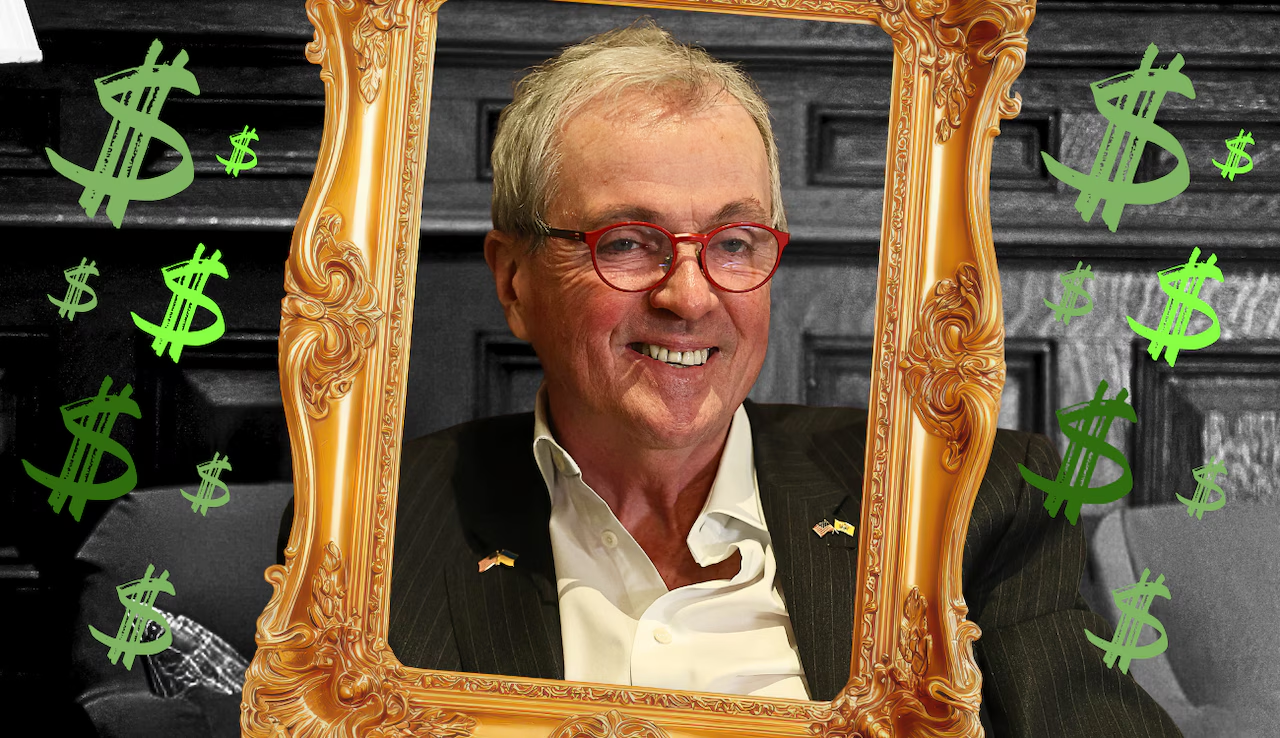
New Jersey taxpayers will pay for the most expensive official gubernatorial portrait ever commissioned in the state’s history after former Gov. Phil Murphy’s administration approved a $135,000 contract for the artwork.
The portrait, which will eventually be displayed in the New Jersey Statehouse alongside paintings of the state’s previous governors, carries a price tag that has drawn public attention because of its unusually high cost. According to details of the contract that became public, the portrait will be created by an internationally recognised artist known for painting U.S. presidents and other prominent public figures.
At $135,000, the commission is believed to be the highest amount ever spent on an official portrait of a New Jersey governor. The cost is also greater than the combined price of the official portraits commissioned for the three governors who served before Murphy, making it a historic expense for the state.
Official portraits have long been part of government tradition in New Jersey and many other states. These paintings serve as permanent historical records that recognise the service of elected leaders. Once completed, the portraits become part of the Statehouse collection and are displayed for visitors, lawmakers, and future generations.
While official portraits are common, the size of this particular contract has sparked discussion about government spending and the use of taxpayer dollars. Critics argue that a six-figure portrait is difficult to justify at a time when many residents remain concerned about the rising cost of living, housing affordability, and other financial pressures facing the state.
Supporters of official portrait programs note that these commissions are intended to preserve state history and are typically created by accomplished artists whose work often commands high prices. They also point out that the portraits are expected to remain on display for decades, making them long-term historical pieces rather than temporary artwork.
The funding for Murphy’s portrait is not coming from a separate appropriation created specifically for the painting. Instead, the money will be drawn from a $250,000 transition account provided for each outgoing New Jersey governor. These transition funds are established to help former governors manage expenses associated with leaving office, including administrative costs such as office space, legal services, staffing, and other transition-related needs.
Because the portrait will be paid through this existing transition account, the commission does not require lawmakers to approve a new spending package. However, the fact that the portrait represents more than half of the available transition fund has added to questions about spending priorities.
The contract reportedly identifies the artist as a globally respected painter with experience creating portraits of presidents, public officials, and well-known public figures. Although the artist’s reputation is considered one reason for the higher price, state officials have not publicly provided additional details explaining how the final contract amount was determined.
Representatives for former Gov. Murphy have not offered public comment regarding the portrait’s cost following the release of the contract information.
Official gubernatorial portraits have traditionally become part of New Jersey’s historical collection after a governor leaves office. Visitors to the Statehouse can view portraits representing generations of state leadership, offering a visual timeline of New Jersey’s political history.
The latest commission has renewed broader conversations about transparency in government spending. While the expenditure appears to fall within existing state rules governing transition funds, some taxpayers and public policy observers believe major discretionary expenses funded with public money should receive greater public explanation.
Government accountability advocates often stress that public confidence increases when officials clearly communicate how taxpayer-funded resources are used, particularly for projects that are symbolic rather than directly tied to government operations.
As work begins on the portrait, it is expected to become one of the most discussed additions to New Jersey’s Statehouse collection—not only because it honours a former governor but also because it now holds the distinction of being the costliest gubernatorial portrait ever commissioned by the state.
Sources
- New Jersey Department of the Treasury
- New Jersey State Legislature
- New Jersey State House Official Resources
- Office of the Governor of New Jersey