
New Jersey Moves to Rethink School Funding as Districts Face Uneven State Aid
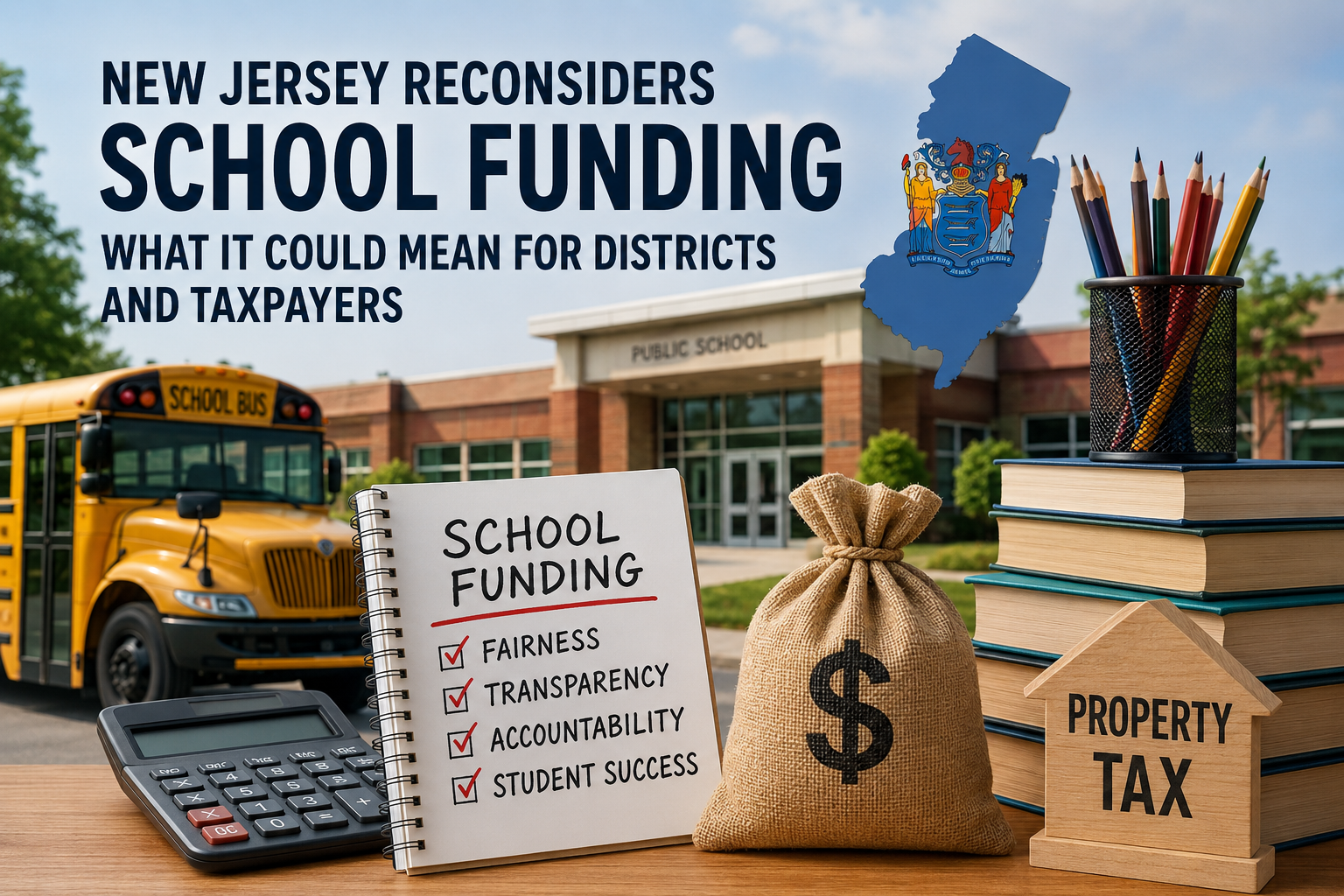
The issue has gained new attention under Gov. Mikie Sherrill, whose administration has made improving the state’s school funding system one of its education priorities. The goal is not simply to increase the amount of money going to schools but to examine whether the current formula still reflects the needs of students, school districts and local communities.
For New Jersey residents, the debate matters because school funding is closely connected to local property taxes. The amount of state aid a district receives can affect how much money a community must raise locally to support its schools.
New Jersey currently uses the School Funding Reform Act, commonly known as SFRA, to determine how state education aid is distributed. The formula considers factors such as student enrolment, the needs of students and a community’s ability to raise money through local resources.
The system was first funded in 2009 after being adopted in 2008. According to the New Jersey Department of Education, SFRA was the first statewide school funding formula to be found constitutional by the New Jersey Supreme Court for use across all of the state’s school districts.
But the formula has faced criticism as economic conditions and school needs have changed.
One of the biggest concerns is that school districts can experience significant changes in state aid from one year to another. Those changes can make it harder for local officials to prepare budgets, plan staffing and determine how much funding needs to come from local property taxpayers.
The state Department of Education has already examined several parts of the system. Its school funding outreach process looked at issues including how community wealth is measured, limits on annual changes in state aid, transportation funding, special education funding and the rules surrounding unusually high special education costs.
The department also sought input from educators, school officials and members of the public as part of that examination.
That review is important because the funding formula does more than simply divide a fixed pot of money among school districts. It attempts to estimate how much each district needs to provide students with the education required under state law while also considering how much revenue the local community is capable of raising.
This means changes to the formula can have different effects from one community to another.
A district that receives more state assistance may have less pressure to raise money locally. A district that receives less state aid may have to rely more heavily on its local tax base, depending on its circumstances and budget decisions.
That is why the discussion around school funding often becomes a property-tax issue as well.
Sherrill has argued that New Jersey needs to get more value from its large investment in public education. During her fiscal year 2027 budget address, she pointed to the need to improve the state’s education system while acknowledging that simply spending more money does not automatically guarantee better results.
Her administration proposed $12.4 billion in direct K-12 school aid for fiscal year 2027, an increase of more than $370 million from the previous fiscal year. The state later enacted the FY 2027 budget, which maintained that record $12.4 billion level of K-12 funding.
The final budget also included $1.4 billion in preschool education aid and additional funding for programmes such as high-impact tutoring.
However, the size of the education budget is only one part of the larger debate.
The more complicated question is how that money should be distributed.
New Jersey has already introduced measures intended to reduce sudden swings in school aid. These include limits on how much state aid can rise or fall in a single year and the use of multiple years of property values and income data when assessing a community’s ability to support its schools.
Those changes were designed to make the system less sensitive to sudden changes in local economic conditions.
The state has also adjusted the way special education aid is calculated. Under newer approaches, special education enrolment is used instead of relying solely on a statewide average.
These changes provide some protection against volatility, but state officials are now looking more broadly at whether the underlying formula needs a larger update.
The issue is particularly important because the costs facing schools have changed since SFRA was created.
Schools now deal with higher employee costs, changing enrolment patterns, increased special education expenses, transportation costs, school security requirements and growing demands for student mental health services.
The state’s Educational Adequacy Report also reviews the costs associated with providing students with the resources needed to meet New Jersey’s academic standards. The report updates major elements of the funding formula, including base per-student costs, grade-level weights, funding for at-risk and bilingual students, transportation and security costs, and special education calculations.
Those calculations can eventually affect how much funding districts are considered to need.
For homeowners, however, it is important not to assume that a change to the state funding formula automatically means property taxes will rise or fall.
There is no single statewide tax outcome from changing school aid. The effect can vary considerably between communities because local property values, school budgets, enrolment and other factors are different from one district to another.
Local school boards still play an important role in setting district budgets, while state aid is only one part of the overall funding picture.
The same is true for school districts that have experienced state aid reductions. A decline in state funding does not automatically translate into an identical increase in a homeowner’s property tax bill. District officials must make budget decisions, and the final tax impact depends on the district’s finances and other available revenue.
That distinction is important as New Jersey continues its review.
For now, the state’s approach appears focused on making the system more predictable while examining whether its underlying calculations still match the realities facing schools.
The debate could ultimately determine how New Jersey balances three competing goals: providing schools with enough money to meet students’ needs, distributing state aid fairly among communities and limiting unexpected pressure on local taxpayers.
The state has already committed record levels of money to K-12 education, but the administration has made clear that funding levels alone are not the end of the discussion.
The next phase will be about how the formula works, how accurately it measures the needs of modern school districts and whether its rules can provide communities with greater financial certainty.
For parents, educators, local officials and property taxpayers, those changes could have consequences well beyond the numbers in a state budget. The formula helps determine how education costs are shared between Trenton and local communities, making its future one of the more important financial issues facing New Jersey schools.
As the state continues reviewing its school funding policies, residents should watch for changes to state aid calculations, district budgets and local tax levies rather than assuming that a formula change alone will determine what they pay.
Sources
New Jersey Department of Education — School Funding Reform Act Outreach
New Jersey Department of Education — State Aid and School Funding Information
Office of the Governor of New Jersey — FY 2027 Budget Address
Office of the Governor of New Jersey — FY 2027 Appropriations Act
New Jersey Department of Education — Educational Adequacy Report 2026