MLB Clarifies Uniform Rules After Giants’ Cap Message Incident Sparks Debate Over Policy Enforcement
Major League Baseball has addressed growing attention around a recent controversy involving San Francisco Giants players and Bible verse messages displayed on their caps during a game, reaffirming that the league’s uniform policy was applied correctly and without religious bias.
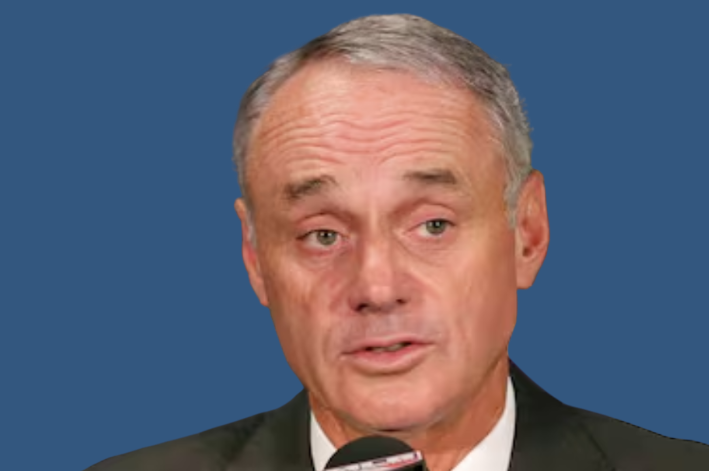
In a formal letter dated June 19, 2026, MLB Commissioner Robert Manfred responded to concerns raised by U.S. Senator Josh Hawley, explaining the league’s position and the steps taken after the incident. The communication has since drawn public discussion on how professional sports handle personal expression on uniforms during official games.
According to the commissioner, three Giants players wore caps that included biblical references while participating in a game where special Pride-themed uniform elements were being used. Following the game, the league issued oral warnings to the players but confirmed that no further disciplinary action would be taken.
Manfred emphasized that the warning was not related to the religious content itself but was based strictly on MLB’s long-standing uniform policy. This policy, developed in agreement with the MLB Players Association, prohibits players from adding any personal messages, symbols, or text to uniforms or equipment while on the field.
The commissioner noted that the rule is applied consistently across all situations, regardless of the message being displayed. The intention, according to MLB, is to ensure that players are not positioned as representatives of social, political, or religious messaging during games, which could potentially lead to division among fans or legal concerns.
The situation also highlighted communication issues within the team. MLB stated that some players were not clearly informed about their options regarding the special game-day uniforms. As a result, they proceeded with modified caps, which later triggered internal review by the league office.
Manfred further explained that the caps were worn throughout the game, and league officials only issued the warning after the match had concluded. By that time, it was also recognized that the team’s internal communication process had not clearly explained the uniform expectations to all players.
MLB has maintained since 2023 a structured approach to special event uniforms, allowing limited exceptions for designated league-wide occasions. These include events such as Jackie Robinson Day, Memorial Day, Father’s Day, and others where uniform elements are temporarily adjusted.
The league has also recognized that participation in themed uniforms must consider players’ personal beliefs. Under current guidelines, athletes are not required to wear special commemorative or celebratory items if doing so conflicts with their religious convictions. This balance, MLB says, is intended to respect individual rights while maintaining consistency in league branding and policy enforcement.
In certain markets such as Los Angeles and San Francisco, exceptions have been made to allow Pride-themed uniform elements due to long-standing local traditions and community engagement. However, even in these cases, participation by players remains optional, and teams are responsible for ensuring clear communication.
MLB reiterated that similar restrictions have been applied in the past to a wide range of personal messages, including tributes to family members or personal acquaintances, reinforcing that the policy is content-neutral and not based on the nature of the message.
The league’s response aims to close the debate around whether the enforcement was selective or discriminatory, insisting instead that it reflects a uniform standard designed to prevent on-field messaging from becoming a point of controversy.
As discussions continue among lawmakers, fans, and sports analysts, MLB’s clarification underscores its effort to balance personal expression, religious freedom, and league-wide consistency within professional baseball.
Sources:
MLB Commissioner Official Letter (June 19, 2026)
Office of U.S. Senator Josh Hawley Public Statement on X