Jennifer Welch Defends Abdul El-Sayed, Slams Republican Criticism Over Campaign Allies
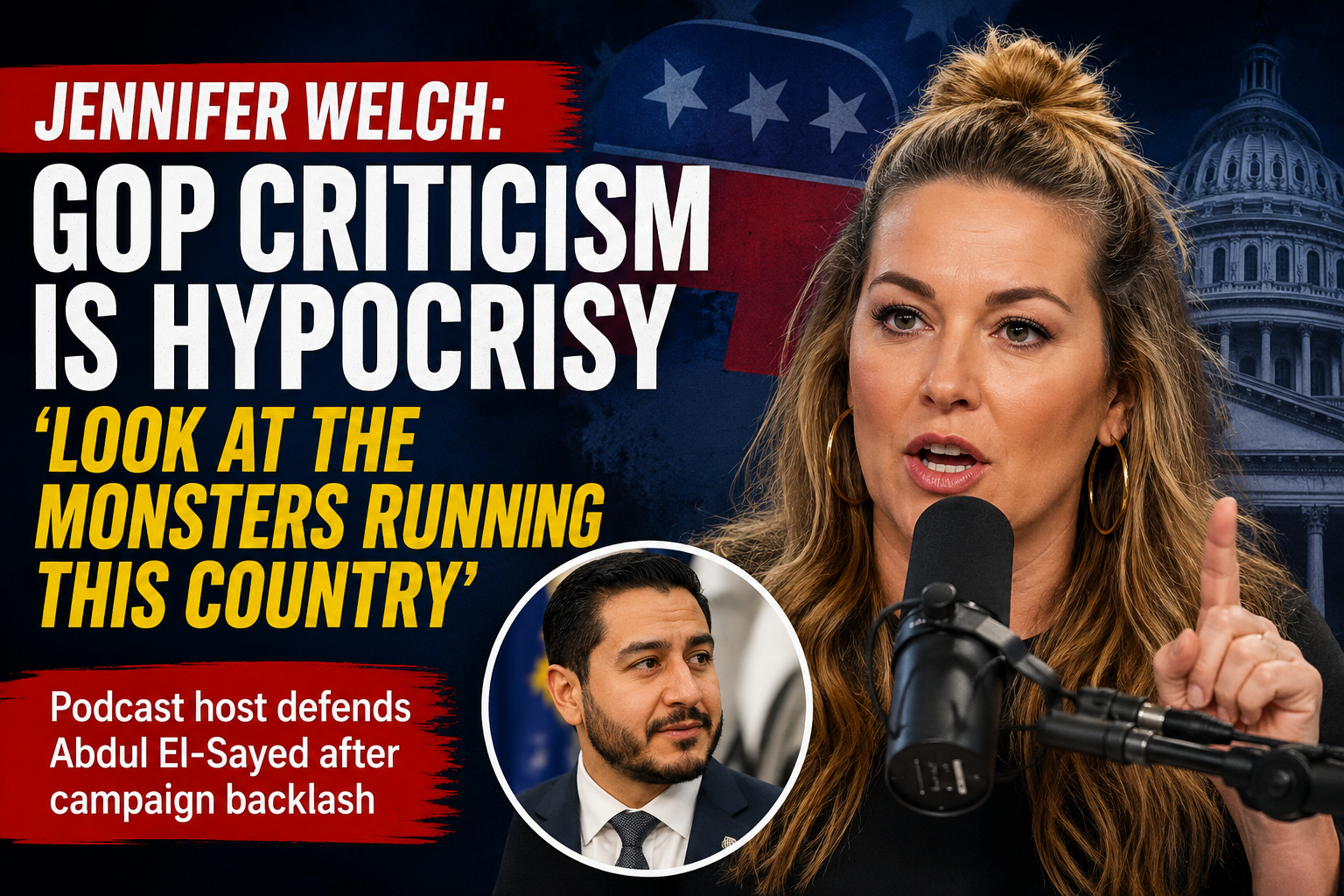
Political commentator and podcast host Jennifer Welch has strongly pushed back against criticism surrounding Democratic candidate Abdul El-Sayed, accusing Republican leaders of applying a double standard when judging political endorsements and campaign appearances.
Welch made the remarks during a recent episode of her political podcast following El-Sayed’s Democratic primary victory earlier this week. The discussion centred on criticism directed at El-Sayed for appearing alongside progressive political streamer Hasan Piker during his campaign.
Speaking passionately on the podcast, Welch argued that many Republicans criticising El-Sayed have themselves campaigned with or supported controversial political figures. She questioned why Democratic candidates often face intense scrutiny over their political associations while similar relationships within the Republican Party receive far less attention.
Welch criticised what she described as inconsistent standards in political debates, saying that voters should focus more on policies and leadership rather than selectively attacking campaign appearances. She also expressed frustration with what she believes is an unfair narrative surrounding Democratic candidates and their supporters.
The comments quickly gained attention after a video clip from the podcast was widely shared on social media, where it sparked debate among supporters and critics alike. Some users praised Welch for calling out what they viewed as political hypocrisy, while others disagreed with both her tone and her assessment of the issue.
The controversy largely stems from Abdul El-Sayed’s campaign appearance with Hasan Piker, one of the internet’s most recognisable political commentators. Piker has built a large audience through live streaming and online political discussions, particularly among younger viewers.
Although he has millions of followers across digital platforms, Piker remains one of the most divisive voices in online politics. His outspoken progressive views, direct style of commentary, and involvement in several public controversies have made him a frequent target of criticism from conservatives while earning strong support from many left-leaning audiences.
For critics of El-Sayed, appearing alongside such a polarising media personality raised concerns about political messaging and campaign strategy. Supporters, however, argue that candidates regularly engage with media figures who represent different segments of their voter base, making such appearances a normal part of modern political campaigns.
Welch dismissed the criticism, suggesting that campaign events should not automatically define a candidate’s beliefs or qualifications for public office. Instead, she argued that voters should evaluate elected officials based on their records, policy proposals, and actions while serving the public.
Jennifer Welch has become a well-known voice in progressive political media over the past several years. Before entering the political commentary space, she gained national attention through the Bravo reality television series Sweet Home Oklahoma. She later transitioned into podcasting, launching I’ve Had It in 2022.
The podcast has developed a sizeable audience by discussing current political events, public policy, and cultural issues from a progressive perspective. Welch frequently addresses topics involving elections, government leadership, and political accountability, often using a direct and conversational style that resonates with many listeners.
Abdul El-Sayed has also emerged as a recognisable Democratic figure in recent years. His campaign has focused on issues such as healthcare, economic opportunity, and government reform. Following his latest primary victory, increased national attention has placed both his campaign and his public appearances under greater scrutiny.
Political analysts note that debates over endorsements and campaign allies have become increasingly common in American politics. As candidates seek support from influencers, activists, media personalities, and public figures with large online followings, questions often arise about how those relationships reflect on a campaign.
Supporters generally view these partnerships as opportunities to reach broader audiences, particularly younger voters who consume political content through digital platforms rather than traditional media. Critics, however, argue that associations with controversial personalities can influence public perception and distract from policy discussions.
Welch’s remarks reflect the broader national debate over political messaging, accountability, and consistency in public criticism. As the election season continues, disagreements over campaign strategy, endorsements, and political alliances are expected to remain a prominent part of the conversation.
While reactions to Welch’s comments remain divided, the discussion highlights how political narratives increasingly unfold across podcasts, livestreams, and social media, where brief clips can quickly shape public debate and attract national attention.
Sources
- Official campaign website or official statements from Abdul El-Sayed (if applicable).
- Official podcast content from I’ve Had It featuring Jennifer Welch.
- Official social media posts published by Jennifer Welch or the I’ve Had It podcast.