
Karoline Leavitt to Leave White House Press Role as She Chooses More Time With Her Family
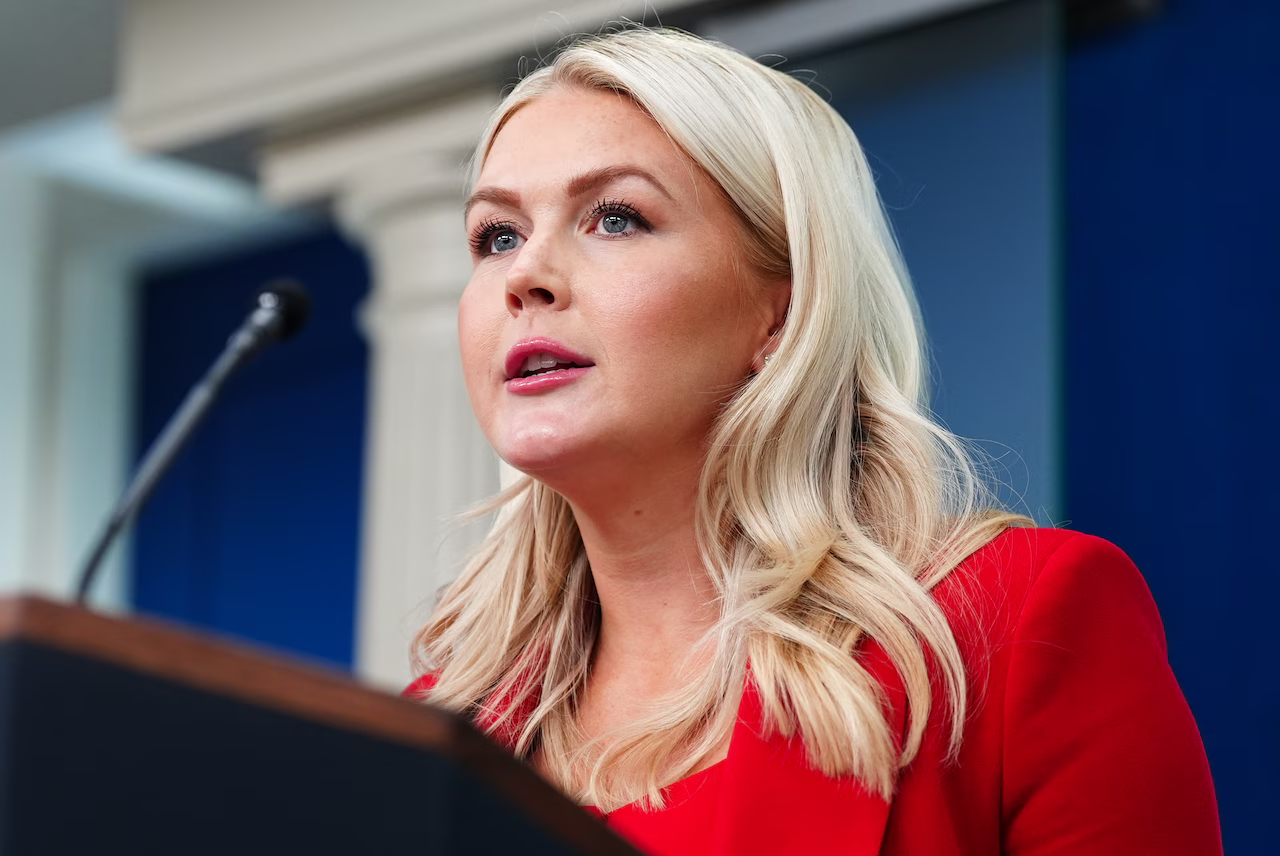
Karoline Leavitt is preparing to leave her position as White House press secretary at the end of August, bringing a major change to President Donald Trump’s communications team just weeks after she returned from maternity leave.
President Trump announced Leavitt’s planned departure on Wednesday, August 12, saying she would step away from the high-pressure White House position to spend more time with her young family. Trump also indicated that Leavitt would remain closely connected to his political operation after leaving the administration, asking her to serve as a top outside adviser and play a role in efforts surrounding the 2026 midterm elections.
Leavitt responded publicly shortly after the announcement, reflecting on her time behind the White House podium and explaining why she believes stepping away is the right decision for her family.
In her statement, Leavitt described serving as press secretary as one of the most significant experiences of her career. She expressed appreciation for the opportunities she received while working in the White House, including accompanying the president on domestic and international trips, meeting foreign leaders and representing the administration during public briefings.
However, the decision comes at an important personal moment for Leavitt. She recently returned to work after an approximately 11-week maternity leave following the birth of her daughter, Viviana, on May 1. She and her husband, Nicholas Riccio, also have a young son, Niko, who is 2.
Leavitt said her time away from the White House gave her an opportunity to reconsider the balance between her demanding public role and her responsibilities as a mother. After returning, she concluded that the schedule and demands of the press secretary position made it difficult for her to be the mother she wanted to be to her two children.
The White House press secretary position is one of the most visible communications jobs in the federal government. The person holding the role regularly faces questions from reporters about presidential decisions, domestic policy, foreign affairs and major events involving the administration. The job can require long hours, frequent travel and constant public attention.
For Leavitt, the decision therefore represents more than a routine personnel change. Her departure comes after she became a prominent public face of Trump’s second administration and established herself as one of the president’s most recognisable political allies.
Trump praised Leavitt following the announcement, describing her as one of the strongest press secretaries to hold the position. He said he understood and respected her decision to spend more time with her family.
The president’s comments also made clear that Leavitt’s departure from the White House does not necessarily mean an end to her involvement in Republican politics.
According to the announcement, Trump wants Leavitt to continue working with him from outside the administration. He identified her as a top outside adviser and said she would remain an influential Republican voice as the party prepares for the November 2026 midterm elections.
Leavitt similarly signalled that she intends to remain active in the political arena. In her response, she said her political fight was moving into a new phase but was not ending.
That arrangement could allow Leavitt to remain involved in Trump’s political efforts without continuing the demanding daily responsibilities associated with serving as White House press secretary.
Her timing is also significant because the 2026 midterm elections are approaching. Midterm elections determine control of seats in Congress and can have a major impact on a president’s ability to advance an agenda during the second half of a term. Trump’s decision to keep Leavitt involved as an outside adviser suggests that her communication skills and strong connection to his political movement could continue to be useful to the administration and Republican Party.
Leavitt has held an unusually prominent position for someone her age. At 28, she is the youngest person ever to serve as White House press secretary. She became press secretary when Trump returned to the presidency in January 2025 and remained in the position throughout the first part of his second term.
Her path to the White House began before her current appointment. Leavitt previously worked in the first Trump administration and later became involved in Trump’s 2024 presidential campaign. Her experience in Trump-aligned political communications helped establish her as a trusted member of his communications team.
As press secretary, Leavitt became a regular presence at White House briefings, where she defended administration policies and responded to questions from journalists. Her approach was closely associated with Trump’s political style, making her a particularly visible figure among his supporters and critics.
Her decision to leave also comes after a period in which the White House press operation has attracted considerable attention over how the administration communicates with traditional news organisations and newer media outlets.
Despite the significance of Leavitt’s departure, the White House had not announced her replacement as of Thursday, August 13. That leaves an important question for the administration as it prepares for the transition at the end of the month.
The identity of the next press secretary could influence how the White House communicates with journalists and the public during the remainder of Trump’s term. The position requires someone who can handle daily briefings, respond quickly to breaking developments and communicate the president’s position on issues ranging from the economy and immigration to foreign policy and national security.
For now, Leavitt is expected to remain in the role through the end of August. Her departure will then mark the end of a relatively short but highly visible period in which she became one of the most recognisable members of Trump’s White House.
Leavitt’s own explanation puts the focus on a personal choice rather than a policy dispute or reported conflict inside the administration. After returning from maternity leave, she said she recognised that the demands of the position were making it difficult to give her two young children the attention she wanted to provide.
At the same time, her planned move into an outside advisory role means she is not disappearing from Trump’s political circle. Instead, she appears set to exchange the White House briefing room for a less formal position in which she can continue supporting the president and Republican political efforts.
The transition will give Trump an opportunity to select a new public face for his administration while allowing Leavitt to devote more time to her family. For the White House, the immediate priority will be finding a successor capable of managing one of the most demanding communications positions in Washington.
For Leavitt, the next chapter appears likely to combine family responsibilities with continued political involvement. Her decision shows how quickly the responsibilities of a high-profile government position can change when personal priorities shift, while her planned advisory role suggests that her influence within Trump’s political movement is expected to continue.
As of August 13, no replacement for Leavitt had been publicly announced. Further details about who will take over the press secretary position and how Leavitt will work with Trump outside the administration are expected to become clearer as the end of August approaches.
Sources
White House — Official website and presidential records.
U.S. Government Publishing Office, GovInfo — Official federal government records documenting the Trump administration and White House activities.