
Greenland’s Petermann Glacier Loses a Massive Ice Section as Scientists Track What Comes Next
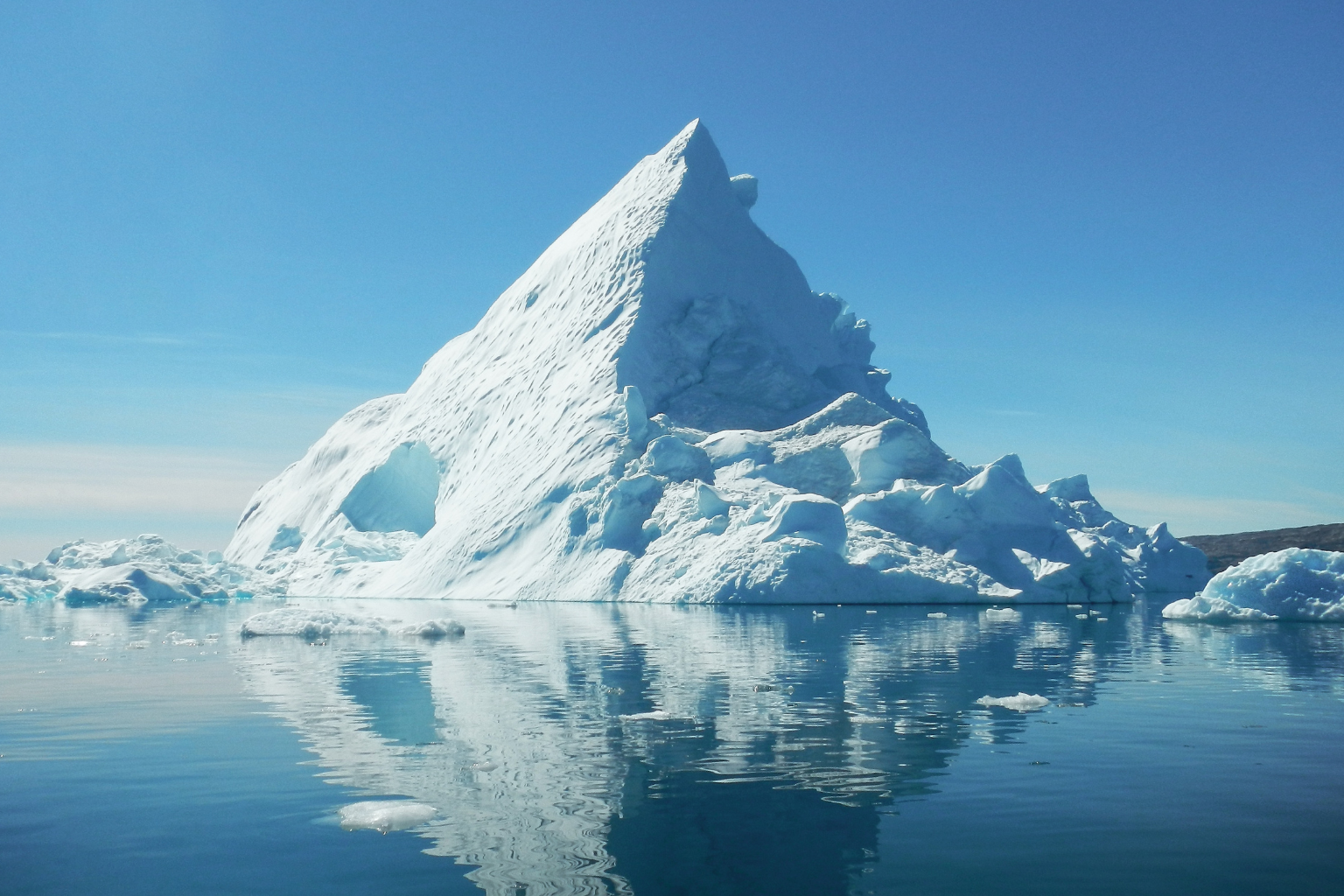
A major change has taken place at Greenland’s Petermann Glacier, where a large section of floating ice broke away and formed a new ice island in the Arctic. The event has drawn close attention from researchers because the detached ice is unusually large and because fractures had been developing across the glacier’s floating ice tongue for years.
The ice separated from Petermann Glacier on August 4, creating a floating mass estimated at about 76 square kilometres, or roughly 29.5 square miles. Researchers estimate that parts of the ice may be as much as 150 metres, nearly 500 feet, thick. That makes the new ice island comparable in surface area to Manhattan and places it among the more significant recent calving events in the Arctic.
Petermann Glacier is located in northwestern Greenland and is one of the region’s major marine-terminating glaciers. Unlike an ordinary block of ice breaking from a frozen surface, this type of event involves a floating section of a glacier’s ice tongue separating from the main ice body and moving into the surrounding waters.
Scientists had been watching Petermann closely before the latest break. Satellite images collected over several years showed cracks gradually widening across the floating ice. Those fractures provided signs that parts of the ice tongue were becoming increasingly unstable.
The August break therefore did not come completely without warning. Researchers had been documenting changes in the glacier since 2019 as part of an international monitoring effort involving scientists from several research institutions. Satellite observations have been particularly important because Petermann Glacier is located in a remote Arctic environment where repeated ground-based observations are difficult.
The newly created ice island is also valuable from a scientific standpoint. Researchers can track how it moves through Arctic waters, how quickly it loses mass and how its shape changes as it encounters ocean currents, sea ice and other environmental conditions.
Large floating ice islands are not especially unusual in Antarctica, where enormous tabular icebergs frequently break from ice shelves. Similar events can occur in the Arctic, but very large ice islands are less common. That makes the Petermann event an important opportunity to study how a large floating ice mass behaves after separating from its glacier.
The story also has a longer history. Petermann Glacier experienced major calving events in 2010 and 2012, when enormous pieces of its floating ice tongue broke away. Satellite observations from NASA and other scientific organisations have documented the glacier’s changing ice front for years. Earlier research has shown that the glacier has experienced both calving and melting beneath its floating ice tongue.
One reason scientists pay particular attention to Petermann is that the glacier is connected to the Greenland Ice Sheet. When floating ice breaks away, that floating ice itself does not directly raise sea level because it is already displacing seawater. However, changes to a floating ice tongue can matter because ice shelves and tongues can provide resistance, or “buttressing”, to ice flowing from the grounded part of a glacier toward the ocean.
If that floating support becomes weaker, the inland glacier can potentially respond by changing its flow and losing ice more rapidly. The exact response depends on the glacier’s structure, ocean conditions, bedrock shape and other factors, so scientists do not treat every calving event as proof of an immediate acceleration in ice loss.
Petermann’s floating tongue has also been affected by melting from below. Research on the glacier has found that ocean water can reach beneath the floating ice, where it contributes to basal melting. NASA has reported particularly high melt rates in the glacier’s grounding zone, the area where the ice transitions from resting on bedrock to floating in seawater.
That underwater process is important because a glacier can lose ice even when there is no dramatic iceberg breakup visible from the surface. Calving and melting are different processes, but both can contribute to changes in the amount and shape of a floating ice tongue.
The latest event is therefore being viewed as one part of a much longer process rather than as an isolated spectacle. Researchers are continuing to examine the remaining floating ice and the fractures that are still visible across it.
Some of those cracks could eventually lead to additional calving. Researchers monitoring the glacier have estimated that further large sections could separate in the future, potentially reducing the remaining floating ice by a substantial amount.
Exactly when that might happen is uncertain. Glaciers do not always follow a simple timetable after a major fracture appears. Some cracks widen quickly, while others can remain relatively stable for years. Ocean currents, tides, sea ice, weather and the physical structure of the glacier can all influence what happens next.
The movement of the new ice island is another reason for continued monitoring. Once a large piece of floating glacier ice becomes independent, it can drift with ocean currents and wind. Its route may take it through areas used by ships and offshore operations.
Large Arctic ice masses can also become difficult to manage once they begin breaking into smaller pieces. A single large ice island may be relatively easy to identify with satellite imagery, while numerous smaller fragments can create a more complicated monitoring problem.
For scientists, however, the drifting ice offers a natural laboratory. Repeated satellite observations can reveal how the ice island changes over time and provide information about the physical conditions affecting it. Such observations can also help researchers improve models used to understand glacier behaviour in the Arctic.
Petermann Glacier has become an important case study because of its size, its history of major calving events and its exposure to ocean processes. It is one of Greenland’s major floating glacier tongues and has experienced substantial changes over the past several decades.
The glacier’s history also shows why a single satellite image should not be viewed in isolation. Earlier large calving events in 2010 and 2012 dramatically shortened the floating tongue, while later observations documented continued changes in its structure. Scientists therefore compare images and measurements collected over many years to determine whether a particular event represents a temporary change or part of a larger trend.
The new ice island will now become another feature to follow. Researchers can use satellite imagery and remote-sensing technology to measure its position, size and shape while also observing changes at the glacier itself.
For the public, the event may look like a dramatic piece of ice simply breaking away from Greenland. For scientists, it is more complicated. The important questions are how the remaining ice tongue responds, whether other fractures continue to grow, how the new ice island moves and how ocean conditions influence the glacier beneath the surface.
Petermann Glacier is not disappearing because of this one event, and scientists have not suggested that the latest calving alone will produce a sudden rise in global sea levels. The significance lies in what the event can reveal about the changing relationship between Greenland’s glaciers, the surrounding ocean and the floating ice that connects the two.
With more fractures still being monitored, Petermann Glacier is likely to remain under close scientific observation. The coming months and years should provide researchers with additional data on whether the latest breakup is an isolated episode or another important step in the continuing evolution of one of Greenland’s best-studied glaciers.
Sources: NASA Earth Observatory, U.S. Geological Survey, Nature Communications, Geophysical Research Letters, and peer-reviewed research on Petermann Glacier and Greenland’s ice dynamics.