
New Jersey Gun Ruling Sets Up Major Test for the Second Amendment
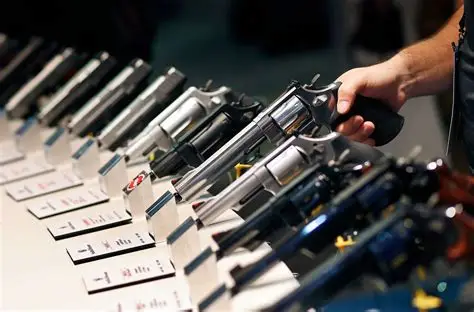
A major federal appeals court ruling in New Jersey has placed the state’s restrictions on certain semiautomatic rifles and larger-capacity magazines at the centre of a much broader fight over the Second Amendment. The decision could become especially important because the U.S. Supreme Court has already agreed to review similar disputes involving Illinois and Connecticut.
On July 17, 2026, the U.S. Court of Appeals for the Third Circuit, sitting with its full panel of active judges, ruled that New Jersey’s restrictions on many semiautomatic rifles and magazines capable of holding more than 10 rounds violate the Second Amendment. The 10-5 decision went beyond an earlier ruling from a federal district court and addressed the broader class of semiautomatic rifles covered by the state’s law.
The ruling does not automatically rewrite gun laws across the United States. It applies to the legal dispute before the Third Circuit, while other states remain governed by their own laws and by decisions from the federal courts that oversee them. However, the decision is significant because it adds a powerful federal appellate ruling to a growing disagreement over how the Constitution applies to modern firearms.
The case, Association of New Jersey Rifle & Pistol Clubs I v. Attorney General New Jersey, grew out of challenges to New Jersey’s restrictions on what state law calls “assault firearms” and “large-capacity ammunition magazines”. New Jersey’s restrictions date back decades, while important changes to the magazine rules were made in 2018.
Under the 2018 law, New Jersey reduced the maximum magazine capacity generally allowed under the challenged provisions from 15 rounds to 10 rounds. The law also established procedures under which people possessing affected magazines had to surrender, transfer, permanently modify or otherwise make them compliant with the new limit, subject to statutory exceptions.
Gun-rights organisations and individual owners challenged the restrictions, arguing that the laws went beyond what the Constitution permits. The lawsuits became more important after the Supreme Court issued its 2022 decision in New York State Rifle & Pistol Association v. Bruen.
Bruen changed the way courts are expected to examine many Second Amendment challenges. Rather than relying primarily on a balancing test that weighs a law’s benefits against the burden it places on gun rights, courts were instructed to look at the Constitution’s text and the nation’s historical tradition of firearm regulation.
The Third Circuit relied heavily on that approach in the New Jersey case. The majority concluded that the semiautomatic rifles covered by the challenged provisions are commonly owned for lawful purposes and therefore fall within the protection of the Second Amendment. The court also treated magazines as protected “arms” when they are necessary components of firearms commonly used for lawful purposes.
That reasoning is at the heart of the dispute.
New Jersey and other states that have adopted similar restrictions have argued that modern semiautomatic rifles and larger-capacity magazines present unique public-safety concerns. Supporters of those laws point to their use in some mass shootings and argue that governments should have authority to restrict weapons they consider especially dangerous.
The Third Circuit majority took a different constitutional view. Its reasoning focused on whether the regulated firearms and magazines are commonly possessed for lawful purposes and whether comparable restrictions are supported by the historical tradition required under the Supreme Court’s Second Amendment decisions.
The disagreement produced a sharply divided appellate ruling. Judge Arianna Freeman wrote the majority opinion, while Judge Patty Shwartz was among the judges who dissented. The dissenting judges argued that the state has a constitutional basis for regulating weapons that they view as particularly dangerous and associated with serious criminal misuse.
The split is important because the Third Circuit is not the only federal appeals court considering these questions.
Other federal appellate courts have reached different conclusions about assault-weapons restrictions. A recent ruling from the Seventh Circuit, for example, upheld an Illinois ban on semiautomatic weapons. That disagreement means the federal courts are no longer speaking with one voice on an issue that could affect millions of gun owners and several states.
The Supreme Court has already stepped into the dispute.
On June 30, 2026, the Supreme Court granted review in Viramontes v. Cook County and consolidated it with Grant v. Higgins for oral argument. The cases involve challenges to semiautomatic rifle restrictions in Illinois and Connecticut. The Supreme Court’s docket shows that the cases have been consolidated for one hour of oral argument, with briefing continuing into the fall.
The question presented in Grant v. Higgins is whether the Second and Fourteenth Amendments protect possession of semiautomatic rifles that are commonly used for lawful purposes, including the AR-15.
That makes the timing of the New Jersey ruling particularly notable.
The Third Circuit has now provided the Supreme Court with another detailed appellate opinion on the same broad constitutional question. When the Supreme Court considers the Illinois and Connecticut cases, it will have competing lower-court approaches before it.
A Supreme Court ruling could eventually provide a nationwide answer to the central constitutional question. If the justices agree with the reasoning used by the Third Circuit, states that maintain similar restrictions could face renewed legal challenges. If the Supreme Court reaches the opposite conclusion, the New Jersey decision could ultimately be narrowed or overturned.
Until then, it is important not to confuse a federal appeals court ruling with a nationwide change in gun law.
The Third Circuit decision directly concerns New Jersey’s challenged provisions and the parties involved in the litigation. The court also sent parts of the broader dispute back to the lower court for additional proceedings involving other categories of firearms covered by New Jersey’s statute, including semiautomatic pistols and shotguns.
That means the legal process is not completely finished.
For New Jersey residents, the practical consequences are therefore more complicated than simply saying that every firearm restriction in the state has disappeared. The ruling addressed specific provisions challenged in the litigation, while other state and federal firearm laws remain in place.
The decision also does not eliminate licensing requirements, background checks or other firearm regulations that were not invalidated by the court. Gun owners should not assume that every New Jersey firearm rule has changed because of the ruling.
The case is nevertheless a major development because of the constitutional principle behind it. The Third Circuit majority concluded that the government cannot simply prohibit commonly owned firearms or magazines based on their modern characteristics without demonstrating a sufficient historical basis under the Supreme Court’s Second Amendment framework.
That principle could have consequences far beyond New Jersey.
The United States has a patchwork of firearm laws. Some states prohibit certain semiautomatic rifles, while others do not. Magazine-capacity restrictions also vary considerably. A constitutional decision from the Supreme Court could therefore affect laws in multiple jurisdictions at once.
The New Jersey ruling also demonstrates how quickly a state-level dispute can become part of a national constitutional debate. What began as a challenge to specific New Jersey laws is now connected to cases that the Supreme Court has agreed to hear.
For advocates on both sides of the gun debate, the coming Supreme Court proceedings could be more consequential than the New Jersey decision itself.
Gun-rights groups have welcomed the Third Circuit ruling as confirmation that commonly owned semiautomatic rifles and magazines receive Second Amendment protection. New Jersey officials and gun-control advocates have criticised the decision, arguing that states should retain authority to address weapons they believe pose significant risks to public safety.
The disagreement reflects a larger national question: how should constitutional protections written more than two centuries ago apply to modern firearms?
The Supreme Court’s answer may determine how courts evaluate assault-weapons bans and magazine-capacity laws for years to come.
For now, the New Jersey decision stands as an important appellate ruling, but it should be viewed as part of an ongoing legal process rather than the final word on the Second Amendment. With the Supreme Court preparing to hear related cases, the nation’s highest court may soon have an opportunity to settle whether states can prohibit commonly owned semiautomatic rifles and restrict the magazines used with them.
The outcome could have consequences not only for New Jersey, Illinois and Connecticut but also potentially for firearm laws across the country.
Sources
U.S. Court of Appeals for the Third Circuit — Association of New Jersey Rifle and Pistol Clubs I v. Attorney General of New Jersey, No. 24-2415.
Supreme Court of the United States — Viramontes v. Cook County, No. 25-238.
Supreme Court of the United States — Grant v. Higgins, No. 25-566.
New Jersey Legislature — P.L. 2018, Chapter 39, Assembly No. 2761.
Associated Press — Federal appeals court ruling on New Jersey’s assault-weapons restrictions.
Reuters — July 17, 2026, report on the Third Circuit decision and its Supreme Court implications.