Giants May Have Found a Smarter Short-Yardage Strategy to Protect Rookie Quarterback Jaxson Dart
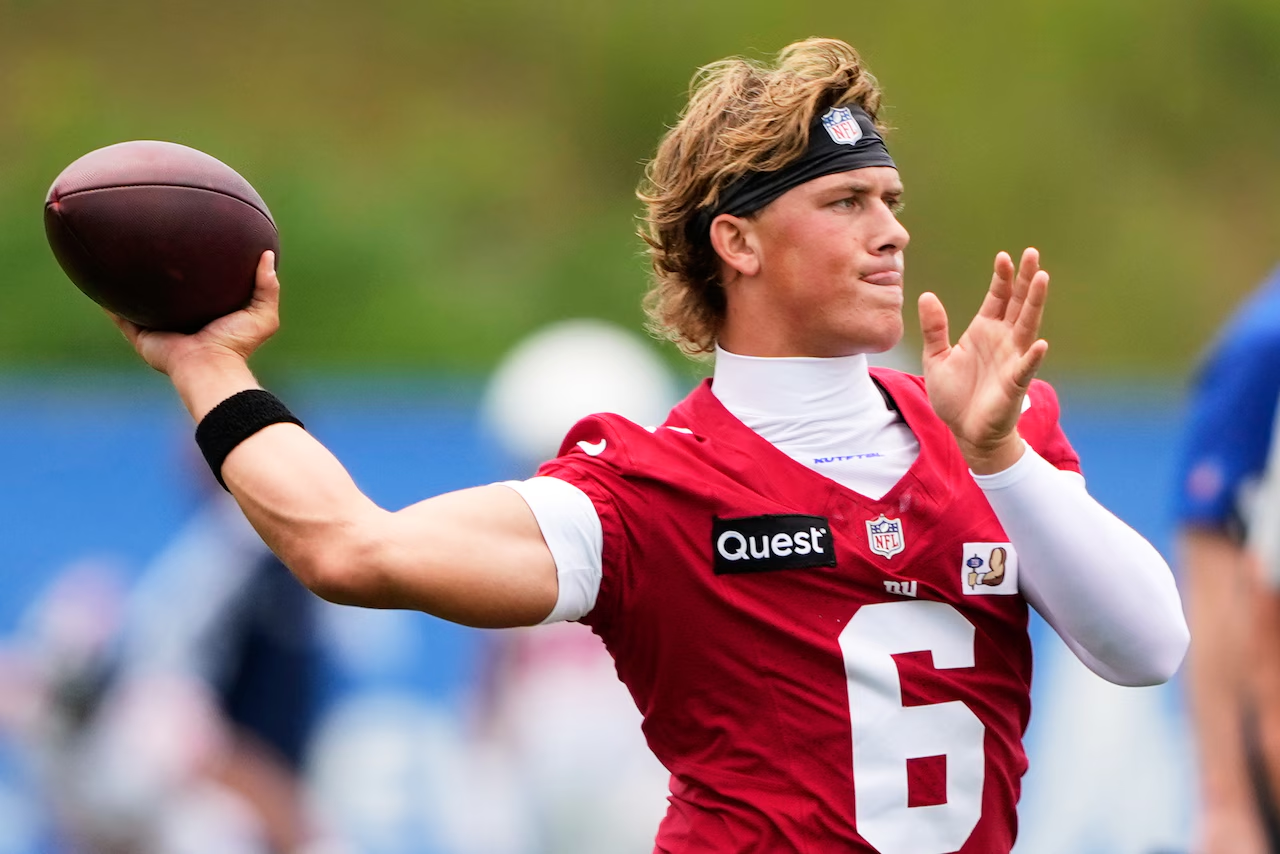
The New York Giants appear to be exploring a new way to handle one of football’s toughest short-yardage situations, and the idea could play an important role in protecting rookie quarterback Jaxson Dart throughout the season.
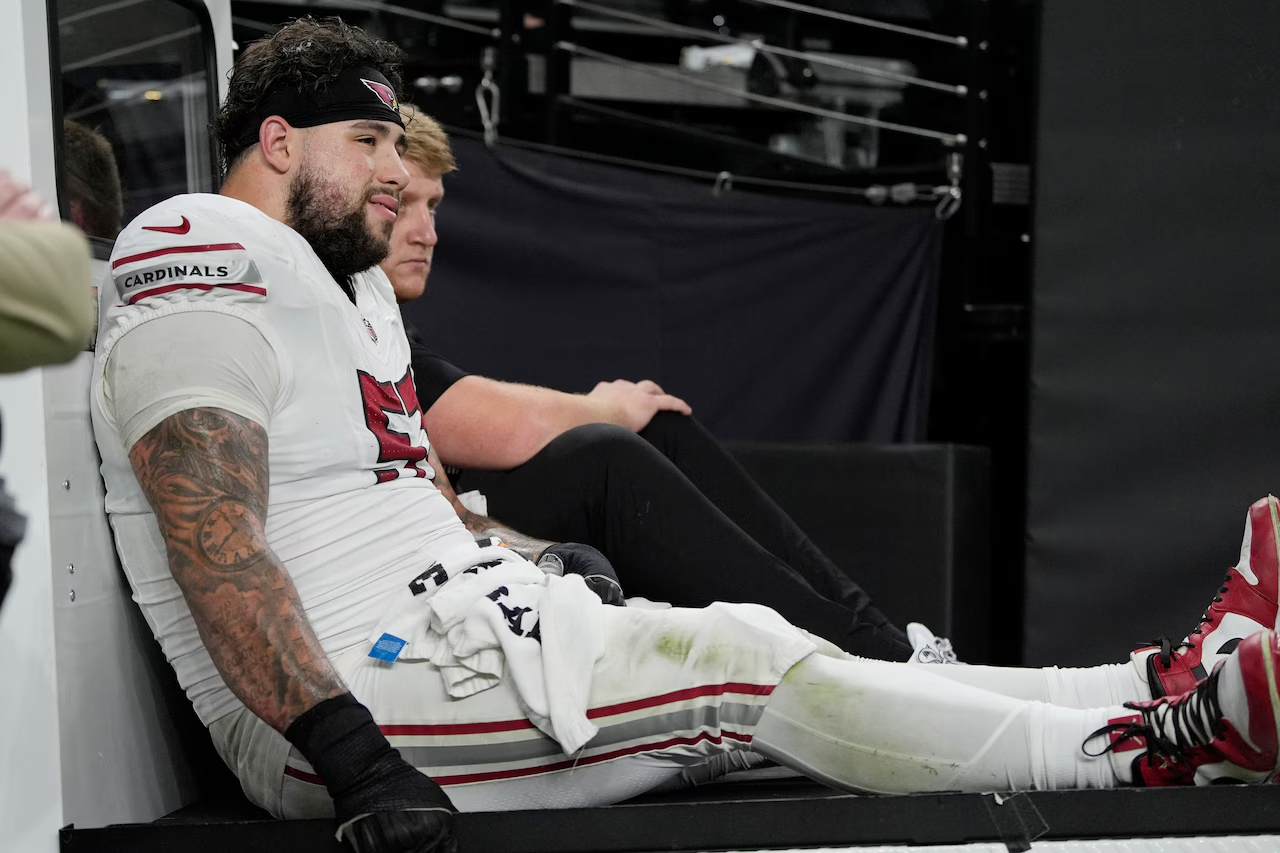
During a recent training camp practice, the Giants experimented with an unusual formation by placing veteran fullback Patrick Ricard under centre instead of Dart while working on a quarterback sneak similar to the Philadelphia Eagles’ highly successful “Tush Push” play. Although the drill took place without full-contact conditions, the decision offered a glimpse into how the coaching staff may be thinking about preserving the health of its young quarterback.
The Eagles have turned the Tush Push into one of the NFL’s most reliable plays over the past several seasons. With quarterback Jalen Hurts leading the charge behind a powerful offensive line, Philadelphia has consistently converted short-yardage situations and goal-line opportunities. Many teams have searched for ways to copy that success, but few have matched its effectiveness.
Instead of asking Dart to absorb repeated hits in those physical situations, the Giants could choose a different path. Patrick Ricard, who stands 6-foot-3 and weighs around 300 pounds, is built for heavy contact. His size and strength make him a natural fit for gaining a yard when the offence needs it most, while allowing the team to reduce unnecessary punishment on its franchise quarterback.
The strategy reflects a broader philosophy from the Giants’ coaching staff. Head coach John Harbaugh wants Dart to use his athletic ability when it benefits the offence, but he also understands the importance of keeping his quarterback healthy over the course of a long NFL season. Mobile quarterbacks can create big plays with their legs, but repeated contact increases the risk of injuries that could affect both the player and the team’s future.
Finding the right balance between aggression and protection is especially important for a rookie. Dart has built his reputation as a competitive runner who is willing to fight for extra yards. While that mindset can energise an offence, coaches also want him to recognise when avoiding contact is the smarter decision.
Offensive coordinator Matt Nagy is expected to build an offence that relies heavily on the running game. That approach does not necessarily mean Dart will be responsible for carrying the football in every critical situation. Instead, the Giants appear interested in spreading those responsibilities across multiple players while allowing Dart to focus on directing the offence and making plays through both the air and on designed runs when appropriate.
Another challenge facing Dart this summer has been adjusting to playing under centre more frequently. Much of his previous experience came from shotgun formations, where the quarterback starts several yards behind the centre. Transitioning to snaps under centre requires different footwork, timing, and mechanics, especially in the passing game.
The coaching staff believes mastering those fundamentals will be essential for the offence they plan to run this season. Improved footwork can lead to better timing with receivers, smoother play-action passes, and more efficient execution throughout the offence. Training camp provides valuable opportunities for Dart to develop those skills before meaningful games begin.
Harbaugh’s willingness to experiment is not new. During his previous tenure with the Baltimore Ravens, he successfully incorporated creative variations of short-yardage plays. One memorable design featured tight end Mark Andrews taking the snap before breaking away from what initially appeared to be a traditional quarterback sneak, resulting in a long touchdown. That play demonstrated how creative formations can force defences to hesitate, creating opportunities for explosive gains.
While Ricard is not expected to duplicate Andrews’ athletic role, his familiarity with Harbaugh’s system could make him an ideal option for specialised packages. Ricard spent several seasons playing under Harbaugh in Baltimore, giving him valuable experience in the coach’s offensive concepts and situational football.
Throughout his NFL career, Ricard has primarily served as a blocking fullback rather than a ball carrier. His offensive statistics reflect that role, with only a limited number of rushing attempts while contributing as both a blocker and occasional receiver. However, success in short-yardage situations often depends more on power, leverage, and execution than on speed or ball-handling experience.
The Giants are also preparing for another reality within the NFC East. Any team hoping to compete for the division title must eventually find ways to both defend and counter Philadelphia’s signature quarterback sneak package. Developing their own variation not only provides another offensive weapon but also helps players better understand how to defend similar concepts during games.
Although it remains uncertain whether the Giants will use the Ricard-led formation during the regular season, the early training camp experiment suggests the coaching staff is looking for practical ways to improve efficiency while protecting one of the organisation’s most valuable assets.
As the preseason continues, fans will be watching closely to see whether this creative approach becomes a permanent part of the Giants’ offensive playbook. If it works, New York could gain an effective solution for critical short-yardage situations while helping ensure Jaxson Dart stays healthy enough to lead the offence throughout the season.
Sources
- New York Giants (Official Team Website)
- National Football League (NFL)
- Philadelphia Eagles (Official Team Website)