August 12 Sky Events 2026: Four Amazing Celestial Displays That Will Make the Night Sky Worth Watching
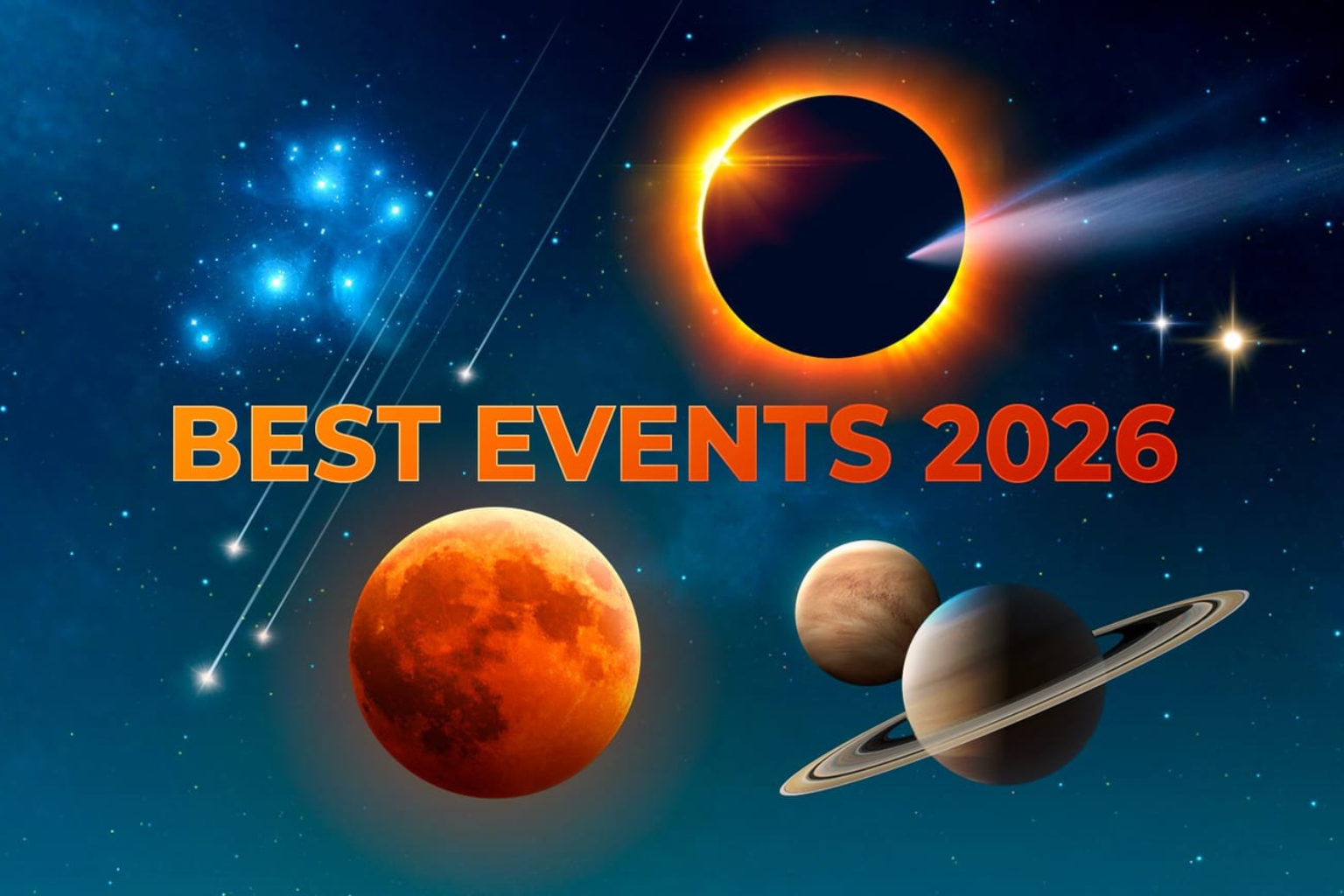
People who enjoy watching the night sky will have several reasons to look up on August 12, as four different celestial events are expected to make the day and night especially memorable. From a rare solar eclipse to one of the year’s most popular meteor showers, astronomy enthusiasts across different parts of the world will have the opportunity to witness impressive natural events without needing expensive equipment.
Astronomers say August has long been considered one of the best months for skywatching, but this year, August 12 stands out because multiple astronomical events are happening within the same 24-hour period. While some of these events will only be visible from certain regions, others can be enjoyed by millions of people under clear skies.
One of the biggest attractions of the day is the solar eclipse. This happens when the Moon moves directly between the Earth and the Sun, temporarily blocking part or all of the Sun’s light. Depending on where people are located, the eclipse will appear either as a partial or total eclipse.
A total solar eclipse is expected to be visible across a limited path that includes parts of Greenland, Iceland, northern Russia, sections of the Atlantic Ocean, northern Spain, and a small part of Portugal. During totality, the Moon completely covers the Sun for a short period, allowing viewers to see the Sun’s outer atmosphere, known as the corona. This phase usually lasts only a few minutes but is considered one of the most remarkable sights in astronomy.
Many more people will be able to experience a partial solar eclipse. In North America, portions of the northern United States—from Alaska across northern states and stretching toward parts of the East Coast—are expected to see at least part of the Sun covered by the Moon. Large areas of Canada, much of Europe, and parts of northwestern Africa are also expected to witness the partial eclipse, weather permitting.
Experts remind the public that looking directly at the Sun without proper eye protection can cause permanent eye damage. Certified solar viewing glasses or approved solar filters should always be used during every phase of a partial eclipse. Ordinary sunglasses, camera lenses, or homemade filters do not provide enough protection.
For people who cannot travel into the eclipse path, the event will still be widely accessible through official online broadcasts. NASA plans to provide live coverage of the eclipse, allowing viewers around the world to safely follow the event as it unfolds.
The excitement does not end once the sun sets. Later that evening, the annual Perseids meteor shower is expected to reach its peak. The Perseids are widely regarded as one of the brightest and most reliable meteor showers of the year, often producing dozens of meteors each hour under ideal conditions.
The meteor shower occurs every year when Earth passes through a stream of tiny dust and rock particles left behind by Comet Swift-Tuttle. As these particles enter Earth’s atmosphere at extremely high speeds, they burn up due to friction with the air, creating bright streaks of light commonly called shooting stars.
The peak viewing period is expected to begin during the evening of August 12 and continue into the early hours of August 13. Astronomy experts recommend finding a location away from city lights, where the sky is darker and visibility is much better. Open fields, parks, and rural areas generally offer the best viewing conditions.
Unlike observing a solar eclipse, no special equipment is needed to enjoy the meteor shower. In fact, binoculars and telescopes can limit the field of view. The best approach is to lie back comfortably, allow your eyes to adjust to the darkness for about 30 minutes, and look toward the widest area of the sky. Patience often rewards observers with frequent meteor sightings throughout the night.
Clear weather will play an important role in determining how much of these events can be seen. Thick clouds, rain, or haze may block visibility in some regions, making local weather forecasts an important part of planning any skywatching activity.
Astronomers note that events like these help increase public interest in science and space exploration. They also provide families, students, and amateur photographers with an opportunity to experience astronomy firsthand without travelling to an observatory.
Whether someone is hoping to witness the Moon partially covering the Sun during the day or planning to spend the night searching for bright meteors, August 12 promises to be one of the most exciting dates on the astronomical calendar this year. With proper preparation, safe viewing practices, and favourable weather, millions of people across the world may enjoy a rare combination of celestial events that highlights the beauty and precision of our solar system.
Sources
- National Aeronautics and Space Administration (NASA)
- NASA Eclipse Program
- NASA Meteor Watch Program
- U.S. Naval Observatory
- American Astronomical Society (AAS)