
New Jersey Launches Competitive Process for New Nuclear Power Projects to Address Future Energy Needs
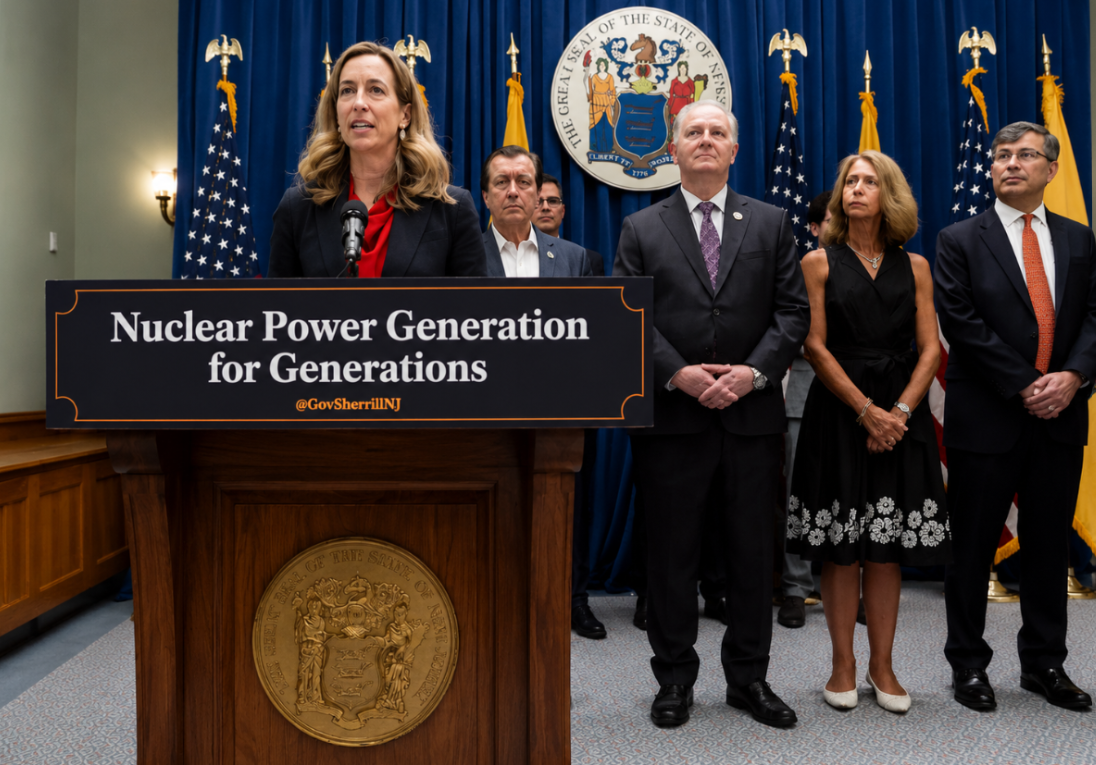
New Jersey has taken another step toward expanding nuclear energy after Gov. Mikie Sherrill signed new legislation that creates a formal process for reviewing and selecting future nuclear power projects. The move is part of the state’s long-term effort to prepare for growing electricity demand while ensuring that any future project provides value for residents.
Speaking in Trenton on Monday, Sherrill said delaying solutions to New Jersey’s future energy challenges would only make them more expensive over time. She pointed to rising utility costs as a reminder that the state must begin planning now rather than waiting until energy shortages become more severe.
The newly signed legislation, known as the POWER NJ Act, establishes a structured procurement process for advanced nuclear energy projects. The process will be managed by the New Jersey Board of Public Utilities (BPU) and the New Jersey Economic Development Authority (EDA), which will oversee how proposals are reviewed and evaluated.
Under the new law, state agencies will begin a competitive process aimed at securing at least 1,100 megawatts of new nuclear power generation. Any company interested in developing a project must first obtain federal financing before its proposal can move through the state’s review process.
State officials emphasized that public participation will play an important role before any project moves forward. According to Gov. Sherrill, the review process will include at least two public comment periods along with a public hearing in any municipality where a proposed project may be located. These steps are intended to give residents an opportunity to review and provide feedback before decisions are made.
The legislation follows another major action taken earlier this year. In April, Gov. Sherrill signed a separate law that ended New Jersey’s long-standing moratorium on new nuclear development. That earlier measure removed a requirement that nuclear waste first be permanently stored at a federal facility before new reactors could be built, a condition that supporters said had effectively prevented new nuclear projects in the state for decades.
Supporters of the POWER NJ Act say the new law does not authorize immediate construction of a nuclear facility. Instead, it creates a clear framework that allows developers to submit proposals while ensuring those projects undergo detailed review before receiving approval.
Assemblyman Wayne DeAngelo, one of the bill’s sponsors and chair of the Assembly Telecommunications and Utilities Committee, said the legislation is designed to support reliable and cleaner electricity while encouraging long-term investment in New Jersey’s energy infrastructure. He added that creating a clear procurement pathway could also help support quality jobs in the future.
Developers submitting proposals will be evaluated through the Board of Public Utilities’ procurement process. One of the most important requirements is that every project must demonstrate a net benefit for electricity customers. If a proposal is not considered cost-effective, the BPU is not required to approve or move forward with it.
Consumer advocates have welcomed the opportunity for careful review but also urged state officials to protect residents from unnecessary costs.
Chris Widelo, state director of AARP New Jersey, said the legislation establishes a process for evaluating future nuclear projects but leaves important questions about potential expenses unanswered. He said every proposal should clearly prove it offers the best value for New Jersey ratepayers before receiving approval.
State Sen. John Burzichelli also stressed that the legislation should not be viewed as the beginning of immediate construction. Instead, he described it as a framework that signals New Jersey’s willingness to consider advanced nuclear energy projects in the future through an organized and competitive process.If new nuclear development eventually moves forward, Salem County could become a central location for expansion efforts. The county is already home to the Salem Nuclear Power Plant and is one of six preapproved sites nationwide identified for future nuclear energy projects. Gov. Sherrill said the Salem location is currently the most advanced option within New Jersey and is considered the closest to being ready for future development.
The governor acknowledged that any new nuclear project would likely take years to complete and could extend beyond her administration. However, she described the legislation as an investment in the state’s long-term energy future, aimed at helping New Jersey avoid future electricity shortages while addressing concerns about affordability over the coming decade.
Sources
- New Jersey Board of Public Utilities (BPU)
- New Jersey Economic Development Authority (EDA)
- Office of the Governor of New Jersey