
Steve Bannon Revives Debate Over Trump’s Political Future Amid 2028 Speculation
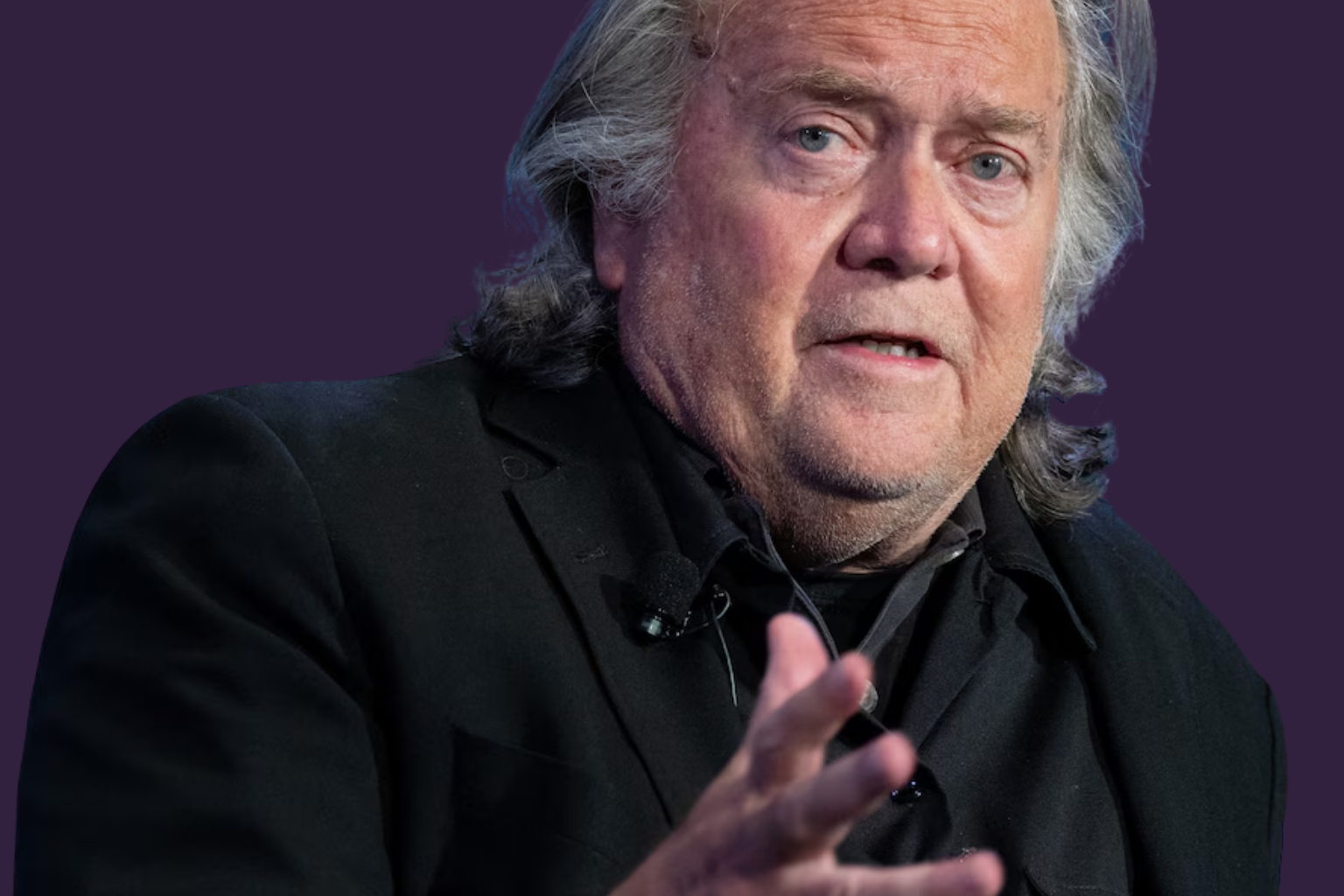
Former White House chief strategist Steve Bannon has once again brought attention to the idea of Donald Trump continuing to play a central role in American politics beyond the traditional two-term limit, sparking renewed discussion within political circles about the future leadership of the Republican Party.
Speaking at the Semafor World Economy summit held in Washington, D.C., Bannon addressed questions about the potential political rise of Vice President JD Vance and whether he could be seen as the natural successor to the MAGA movement. Instead of focusing on a transition of leadership, Bannon emphasized that, in his view, Donald Trump remains the key figure in the movement.
During the discussion, Bannon stated that he strongly supports the idea of Trump serving another term in the White House. When asked whether his remarks were meant to challenge or undermine JD Vance, Bannon denied that suggestion and insisted his position was serious rather than playful.
He also questioned the audience about voter support for Trump and his economic agenda, reinforcing his belief that Trump continues to hold strong political influence among his supporters.
JD Vance, currently serving as Vice President, has been widely mentioned in early political polling as a leading potential candidate for the 2028 presidential election within the Republican Party. However, he has not formally announced any intention to run. In previous public remarks, Vance has acknowledged that he has considered what a future presidential campaign might look like, particularly after the 2026 midterm elections, and has said he would discuss such a possibility with Trump at the appropriate time.
Bannon’s recent comments are consistent with statements he made in earlier interviews, where he suggested that there were strategies being discussed to extend Trump’s political leadership beyond the conventional constitutional limits. He has previously claimed that alternative political and legal interpretations could be explored, even though the U.S. Constitution’s 22nd Amendment restricts presidents to two elected terms.
He has also stated that he has spoken with legal experts who believe there may be ways to challenge or reinterpret the amendment, though he did not provide detailed explanations. These remarks have continued to fuel debate among legal scholars and political analysts, many of whom maintain that the constitutional limit remains clear.
Former President Donald Trump has previously addressed speculation about serving beyond two terms, acknowledging in public comments that he is not permitted to run again under current law. At the same time, he has highlighted potential Republican successors, including Vice President JD Vance and Secretary of State Marco Rubio, describing both as capable figures within the party.
Trump has not officially endorsed a specific candidate for the future, but he has expressed confidence in the strength of potential leadership options within his political circle.
As discussions around the 2028 election begin to take shape, Bannon’s remarks add further attention to ongoing divisions within Republican strategy—particularly between those focused on institutional succession and those who continue to emphasize Trump’s central role in the party’s identity.
Sources:
Semafor World Economy Summit remarks (Washington, D.C.)
The Economist interview with Steve Bannon (October statement reference)
NBC News interview with Donald Trump (February statement reference)
Public statements and constitutional reference to the 22nd Amendment of the United States Constitution