Newark Police Add 45 Officers as City Strengthens Diversity and Community Representation
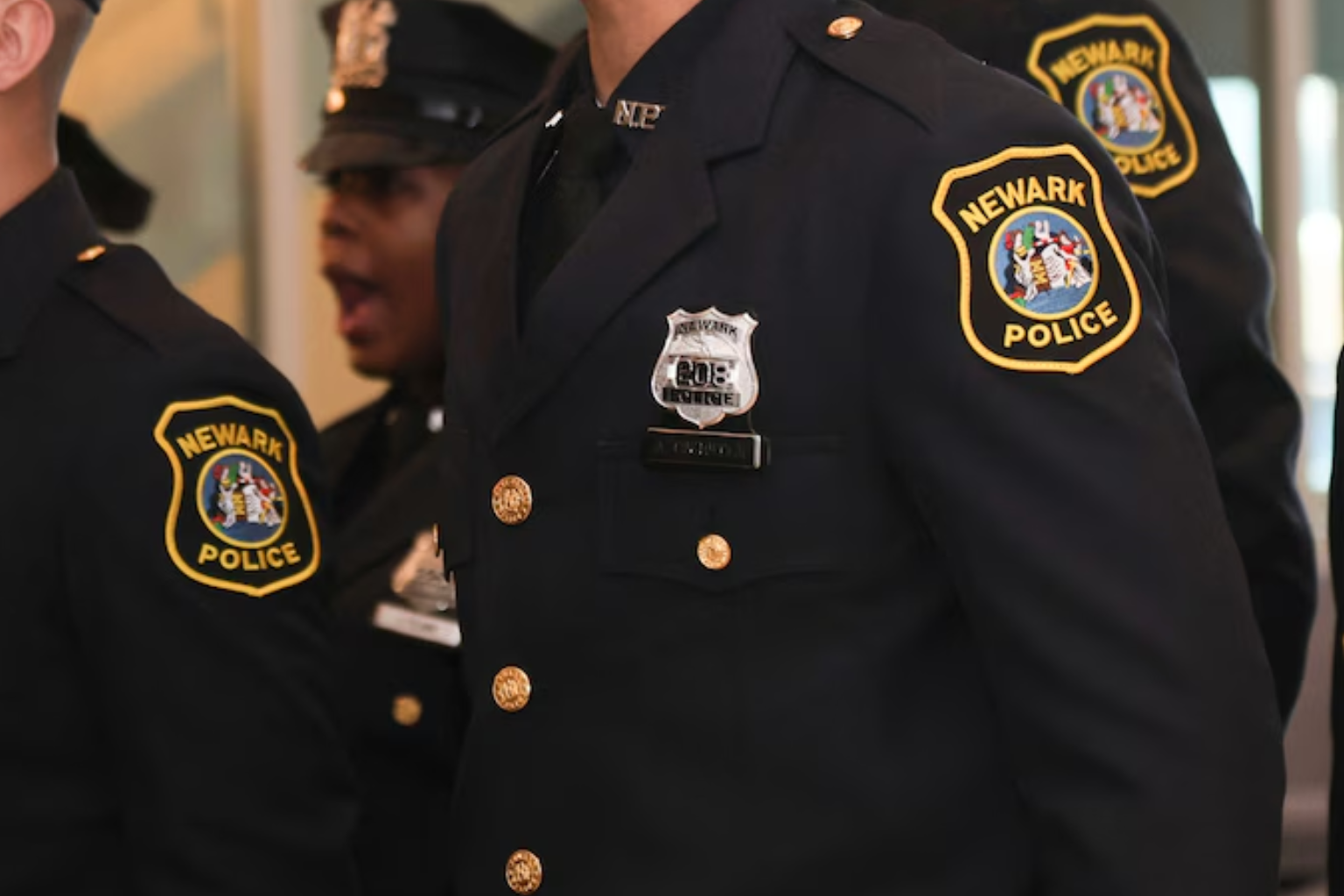
In another step toward creating a resident-representative police department, Newark hired 45 more officers. After graduating from William Mobile Ashby Community Care and Training Center, local dignitaries, police leaders, and hundreds of family members swore in the new class.
The Department of Public Safety said the new class increases Hispanic representation in the Newark Police Division. Of the 45 new cops, 28 are Hispanic, 11 Black, and 6 White. The agency’s recent hires mirror the city’s demographics, particularly its growing Hispanic community.
The agency had 1,106 officers before graduation. The workforce was 49% Hispanic men and women. The division had 34.1% black and 16.5% non-Hispanic white policemen. These estimates reflect Newark’s 2024 317,000 population prediction. The city’s census data shows 45.7 percent Black non-Hispanic, 37.6 percent Hispanic, 12.6 percent white, 2 percent Asian, and 2 percent other.
The graduation ceremony was held at the Bergen Street training center, which opened in 2024 and was recently certified by the New Jersey Police Training Commission to educate state department personnel. Newark’s police enforcement training modernization focuses on the facility.
About 200 family and supporters saw the swearing-in in the auditorium. Mayor Ras J. Baraka, Deputy Mayor Lakeesha Eure, and Emanuel Miranda attended. Newark Police Captain Neil Laurie’s son graduated, making the celebration personal.
The ceremony followed police protocol. Before taking seats, recruits marched in formation through the auditorium, chanting. Their official tone stressed serving one of New Jersey’s largest cities.
Nine women and 36 men comprise the new class. Despite the gender gap in law enforcement, officials claim more women are joining.
Training academy leader Captain James George encouraged teamwork and public obligation to graduates. He acknowledged their cadet-to-officer transition. First-year officers’ pay will increase from $41,591 to $63,902 due to greater tasks.
City officials also praised the department’s decade-long reform. Lakeesha Eure, Deputy Mayor, mentioned the city’s 1960s police-community conflict. Afterward, civil rights and accountability concerns persisted. In November, a judge ended nine years of federal oversight in Newark, concluding improvements had generally succeeded.
Officials say the department uses data-driven policing and violence prevention. Homicides and other violent crimes have dropped citywide since these reforms. City authorities emphasized responsibility, professionalism, and community involvement by the Newark Police Division.
Mayor Ras J. Baraka and other officials said the new class emphasizes public safety and officer-resident relations. A diverse agency reflects Newark’s population and is crucial to efficient police, they said.
With 45 new officers, Newark aspires to create a community-focused police force. Recruits and families celebrated beyond graduation. Newark’s law enforcement culture and mission were changing, according to municipal leaders.