
New Jersey Gas Prices Cross $4 Mark as Trump Points to Global Tensions
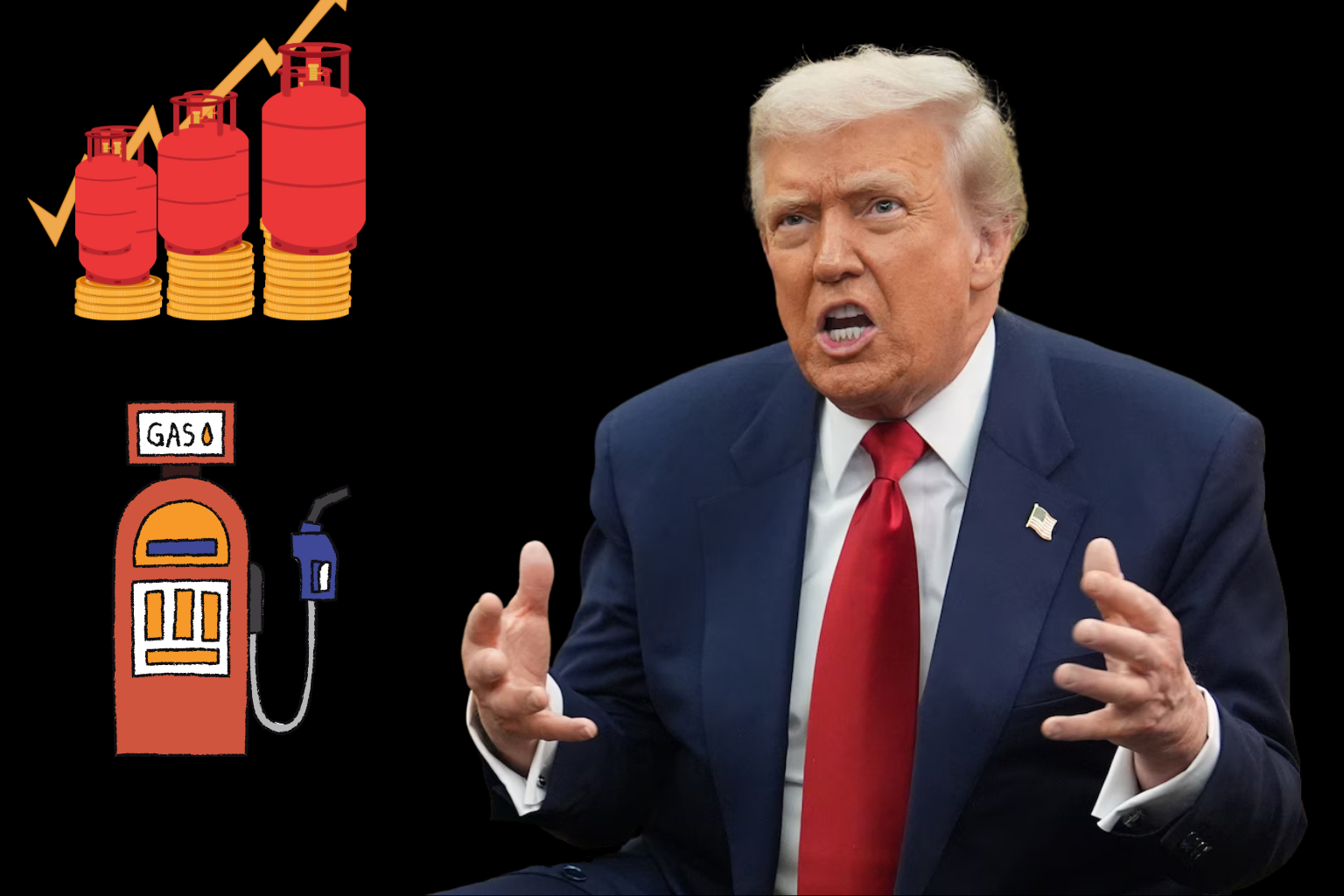
Gas prices in New Jersey have officially crossed the $4 per gallon mark, creating fresh concern among drivers and households already dealing with rising living costs. The increase comes at a time of global uncertainty in the energy market, with political leaders offering explanations for the sudden spike.
According to recent data, the average price of regular gasoline in New Jersey reached $4.02 per gallon on Wednesday, marking the first time it has crossed this level in recent months. Prices continued to rise slightly on Thursday, climbing to an average of $4.05 per gallon. Across the United States, the national average also moved higher, reaching $4.08 per gallon.
Despite the statewide increase, gas prices are not uniform across all regions. Some counties are still seeing slightly lower averages, offering minor relief to drivers. Passaic County reported one of the lowest averages at $3.94 per gallon, while Sussex County recorded higher prices, averaging around $4.06 per gallon. These variations show that local factors still play a role, even during broader price surges.
At the same time, limited lower-cost options remain available for consumers who search carefully. One station in Absecon was offering gas at $3.35 per gallon for cash payments, showing that price differences can still be significant depending on location and payment method.
Addressing the issue, former President Donald Trump spoke publicly about the rising fuel costs and acknowledged that many Americans are feeling the pressure. He attributed the increase to recent international developments, specifically pointing to tensions involving Iran. According to his remarks, attacks linked to Iran on commercial oil routes and nearby regions have disrupted the global supply chain, leading to short-term price increases.
Trump emphasized that the situation is temporary and tied to global instability rather than domestic production problems. He stated that the United States continues to produce large amounts of oil and gas and is not at risk of running out of fuel. He also highlighted the country’s position as a leading energy producer, suggesting that supply within the U.S. remains strong.
One of the major global factors affecting prices is the closure of the Strait of Hormuz, a critical shipping route through which a large portion of the world’s oil supply passes. Any disruption in this region has a direct impact on global oil availability, which in turn affects fuel prices in the United States and other countries. Trump indicated that once this key route reopens, the flow of oil will stabilize and prices are expected to decrease.
The recent upward trend in gas prices began after the United States carried out airstrikes against Iran on February 28. Since then, fuel costs have steadily increased, reflecting the close link between geopolitical events and energy markets.
This is not the first time New Jersey drivers have faced such high prices. The last major surge occurred in March 2022, following the start of the Russia-Ukraine conflict. During that period, gas prices climbed above $5 per gallon at their peak before gradually declining later in the year. By late August 2022, prices had dropped back below $4 per gallon.
The current situation highlights how quickly global events can influence everyday expenses like fuel. While officials suggest that the increase may be temporary, drivers across New Jersey are already feeling the financial impact. For now, consumers are left watching both international developments and local prices, hoping for stability in the coming weeks.
Sources:
AAA (American Automobile Association)
Official statements from U.S. federal leadership
Gas price tracking data (GasBuddy)