
White House Pushes Forward on Secure Underground Complex Beneath Planned Ballroom
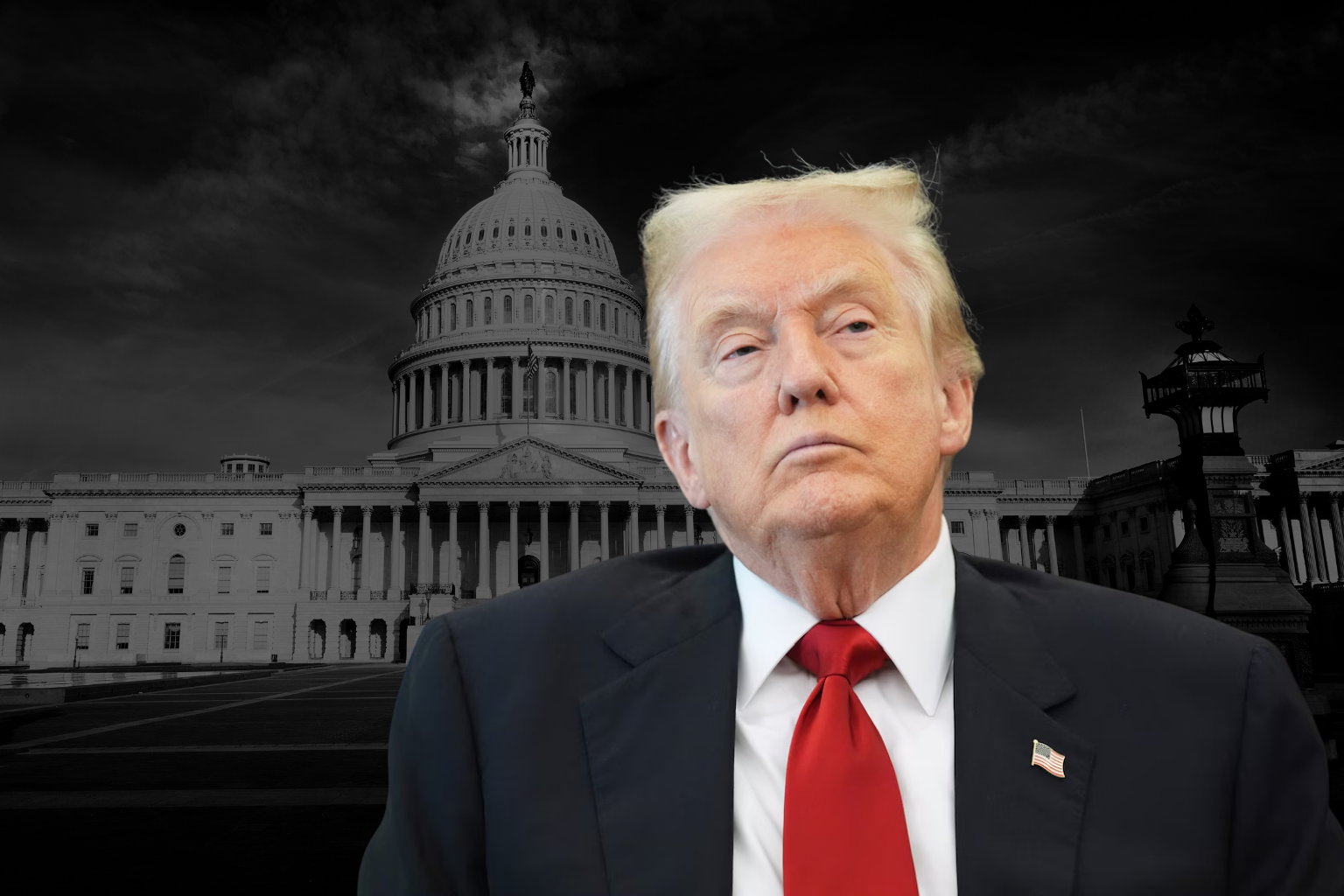
The White House is at the center of a growing legal and political debate as officials move to continue construction of a large ballroom project, while also revealing new details about a fortified underground complex planned beneath it. The development has drawn attention not only for its scale but also for the security-focused infrastructure being proposed.
According to a recent court filing submitted to the U.S. Court of Appeals for the D.C. Circuit, the administration of Donald Trump argued that the upgrades tied to the East Wing redevelopment are critical for national security. Officials emphasized that the construction goes far beyond a ceremonial ballroom, describing it instead as part of a broader protective system designed to safeguard the president, his family, and key staff.
The filing outlines that the project will incorporate advanced structural reinforcements, including missile-resistant steel columns, specialized beams, and roofing materials designed to withstand drone threats. In addition, the structure will feature highly fortified glass capable of resisting bullets, blasts, and other high-impact threats. These features, the administration claims, are essential given evolving security risks facing high-profile government sites.
More significantly, the plans include the development of secure facilities beneath the ballroom itself. These underground additions are expected to include bomb shelters as well as medical and hospital-grade infrastructure, further reinforcing the site’s emergency preparedness capabilities. Officials argue that these features are not optional but necessary upgrades to replace what they described as an aging and structurally compromised East Wing.
The project has also been framed as part of a larger defense initiative. President Trump previously stated that the U.S. military is involved in constructing a “massive complex” beneath the ballroom, suggesting that the visible structure above ground will serve as a protective cover for more critical installations below.
Despite these arguments, the project has encountered legal resistance. The National Trust for Historic Preservation filed a lawsuit seeking to halt construction, claiming that required review processes were bypassed. The group has challenged the urgency and necessity of the project, arguing that the absence of such a ballroom has never previously posed a security risk to U.S. presidents.
A federal judge, Richard J. Leon, recently issued a preliminary injunction pausing construction. In his ruling, he stated that existing laws do not appear to grant the president the level of authority claimed for altering federal property in this manner. However, the order was temporarily stayed to allow time for an appeal, giving the administration an opportunity to continue its legal push.
In response, President Trump publicly criticized the legal challenge, defending the project as being ahead of schedule, under budget, and funded without taxpayer money. Administration filings further noted that approximately $400 million in private donations have already been committed or spent on materials, many of which are already manufactured or in transit.
Opponents, however, remain unconvinced. Preservation advocates argue that the administration’s national security claims are overstated and point out that ongoing construction has not disrupted the president’s ability to live and work at the White House, host international leaders, or conduct official business.
As the legal battle continues, the case highlights a broader tension between modernization and historical preservation at one of the nation’s most iconic sites. The outcome of the appeal will likely determine whether construction proceeds as planned or faces further delays, with implications for how future administrations approach changes to federal landmarks.
Sources
U.S. Court of Appeals for the D.C. Circuit
White House official court filings
National Trust for Historic Preservation filings
U.S. District Court ruling by Judge Richard J. Leon