
JD Vance Faces Backlash After Unusual Analogy While Addressing Iran Nuclear Issue
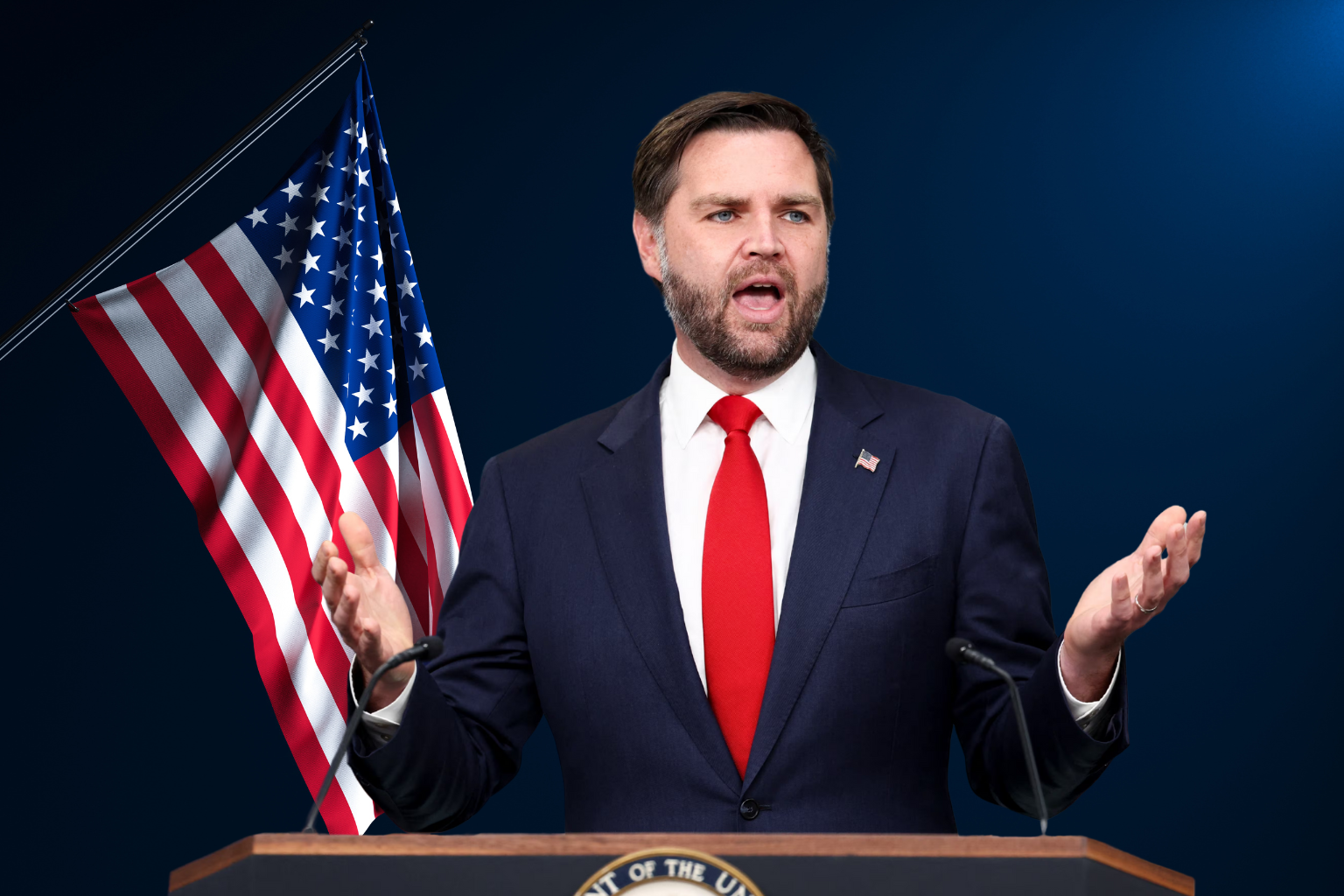
Vice President JD Vance is drawing widespread attention after making an unexpected comparison while speaking about Iran’s nuclear stance, a remark that quickly sparked debate and criticism across social media.
During a recent exchange with reporters, Vance responded to comments made by Mohammad-Bagher Ghalibaf regarding Iran’s position on uranium enrichment. Ghalibaf had stated that any ceasefire agreement should not limit Iran’s claimed right to enrich uranium, a position long held by Iranian officials.
While addressing this issue, Vance introduced a personal analogy involving his wife, Usha Vance. He explained that although his wife technically has the right to skydive, she chooses not to because of a mutual understanding between them. He used this comparison to emphasize that the United States is more concerned with Iran’s actions rather than its stated rights.
Vance further clarified that U.S. policy remains unchanged on uranium enrichment and that the administration is focused on ensuring that Iran does not take steps that could escalate nuclear risks. His remarks were intended to reinforce the U.S. stance on monitoring and controlling nuclear activity rather than debating theoretical rights.
However, the comparison quickly became a focal point of criticism. Many users on the social media platform X described the analogy as unusual and inappropriate given the seriousness of the topic. Critics argued that comparing a personal lifestyle choice to a complex geopolitical issue involving nuclear capabilities weakened the clarity of the message.
Among those प्रतिक्रिया देने वालों में Eric Columbus, who questioned the logic behind the analogy, suggesting it failed to align with the gravity of nuclear policy discussions. Similarly, activist Shannon Watts responded with a sarcastic remark, reflecting broader public skepticism. Other commentators, including Euan Rellie and Sam Alberti, also criticized the statement, calling it awkward and ineffective.
The debate comes at a time when the United States is actively engaged in discussions around Iran’s nuclear program. President Donald Trump recently reiterated that Iran would not be allowed to enrich uranium under the current agreement framework. His statement highlighted ongoing efforts by the U.S. to monitor and restrict nuclear development activities that could pose global security risks.
Iran, on the other hand, continues to maintain that uranium enrichment is its sovereign right. While enrichment can be used for civilian energy purposes, it also has the potential to be developed into nuclear weapons if taken to higher levels, making it a critical point of concern for international observers.
Vance’s comments, while intended to simplify a complex issue, have instead intensified public discussion about how political leaders communicate sensitive foreign policy matters. The reaction underscores the importance of clear and precise messaging, especially when addressing topics with significant global implications.
Sources
Official statements from U.S. administration officials
Public remarks reported from Vice President JD Vance
Statements attributed to Iranian parliamentary leadership
Public reactions from verified commentators and analysts