Trump’s Lighthearted Remark Raises Fresh Questions About Loyalty Inside the White House
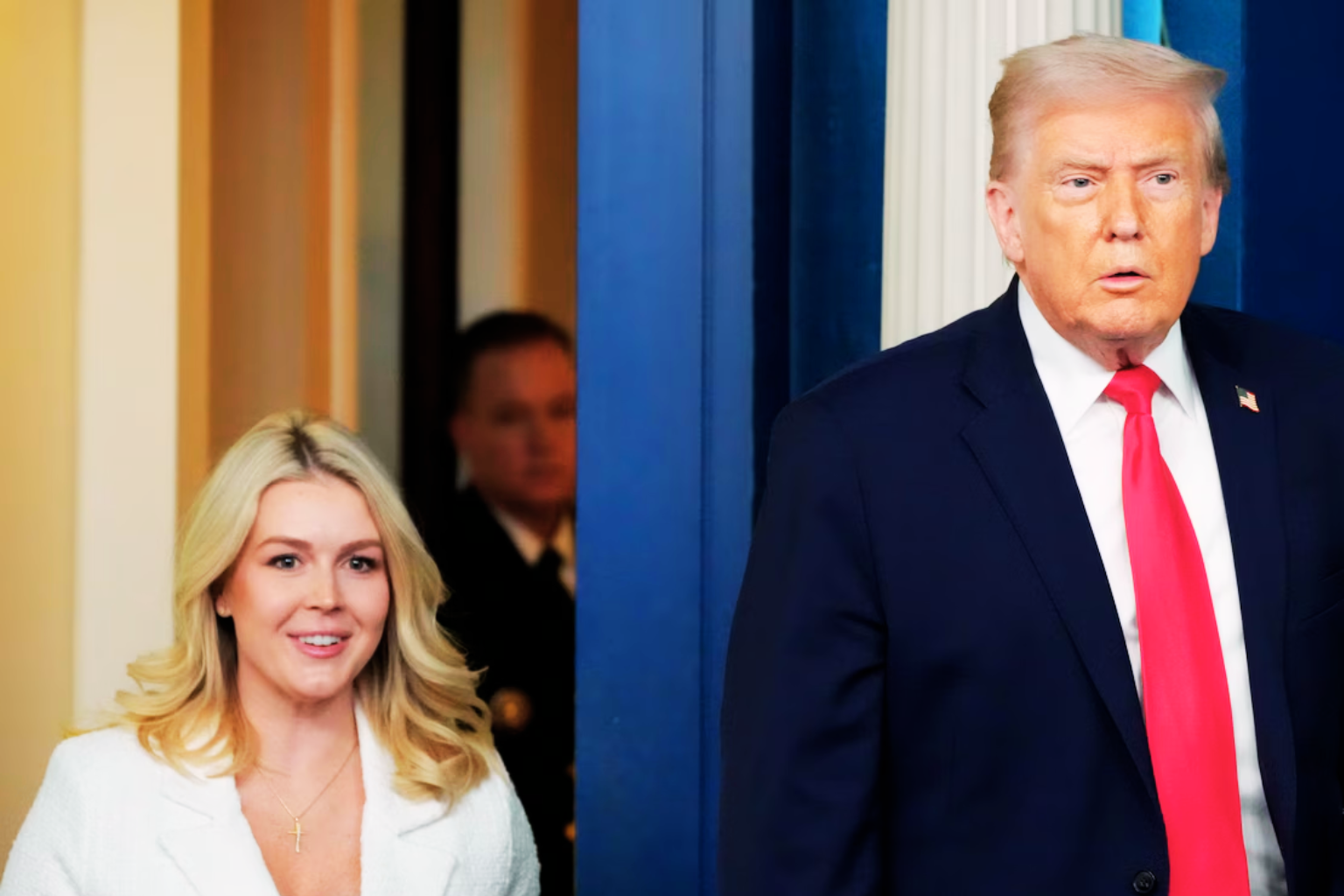
This week, President Donald Trump made a joke during a White House briefing that has swiftly gained notice for revealing how his inner circle makes choices and dissents. Trump attended the briefing to honor his second term’s one-year anniversary to demonstrate continuity and trust in his government.
Trump quipped that he contemplated renaming the Gulf of Mexico the “Gulf of Trump.” He laughed at the idea, knowing how it would be regarded publicly. He cited a hypothetical situation in which his advisors opposed the plan. Trump grinned to White House Press Secretary Karoline Leavitt and said his people “don’t rebuff me too much.”
Despite being delivered with a smile, critics and political analysts perceive the phrase as an accidental acknowledgement of Trump’s administration’s unity. The comment confirmed observers’ longstanding fear that the president’s closest advisors had restricted dissent, especially in his second term.
Recent political criticism shares this concern. Journalists and political commentators highlighted Republican leaders’ growing deference to the president earlier in the term. According to this opinion, Trump’s election victory has increased his power to the point that party dissension is rare. Critics say major policy changes and high-profile programs have passed with little internal opposition.
Former Labor Secretary Robert Reich warned that loyalty-based regimes risk advisors who withhold honest or critical comments. He believed such circumstances hinder real debate and objective advice that leaders need to make decisions.
Not only non-government pundits worry about this compliance culture. One of Trump’s most prominent Republican detractors, Kentucky Representative Thomas Massie, has openly lambasted fellow members for blindly backing the president’s agenda. Massie claims that the political cost of opposing Trump has risen so high that many lawmakers feel they must comply regardless of personal or policy differences.
However, president supporters see this togetherness differently. They claim that strong administrative alignment speeds up decision-making and clarifies direction, especially on significant national and international matters. This view sees loyalty as a sign of strong leadership and shared aims.
Trump’s brief and casual comment has fueled a debate about power, influence, and accountability at the highest levels of government. The joke has become a discussion on the delicate balance between leadership, allegiance, and open debate in a presidency that continues to change American politics.
Sources
The White House
The Guardian
The Hill
The New York Times