Trump’s New ‘Board of Peace’ Sparks Online Backlash After First Global Meeting
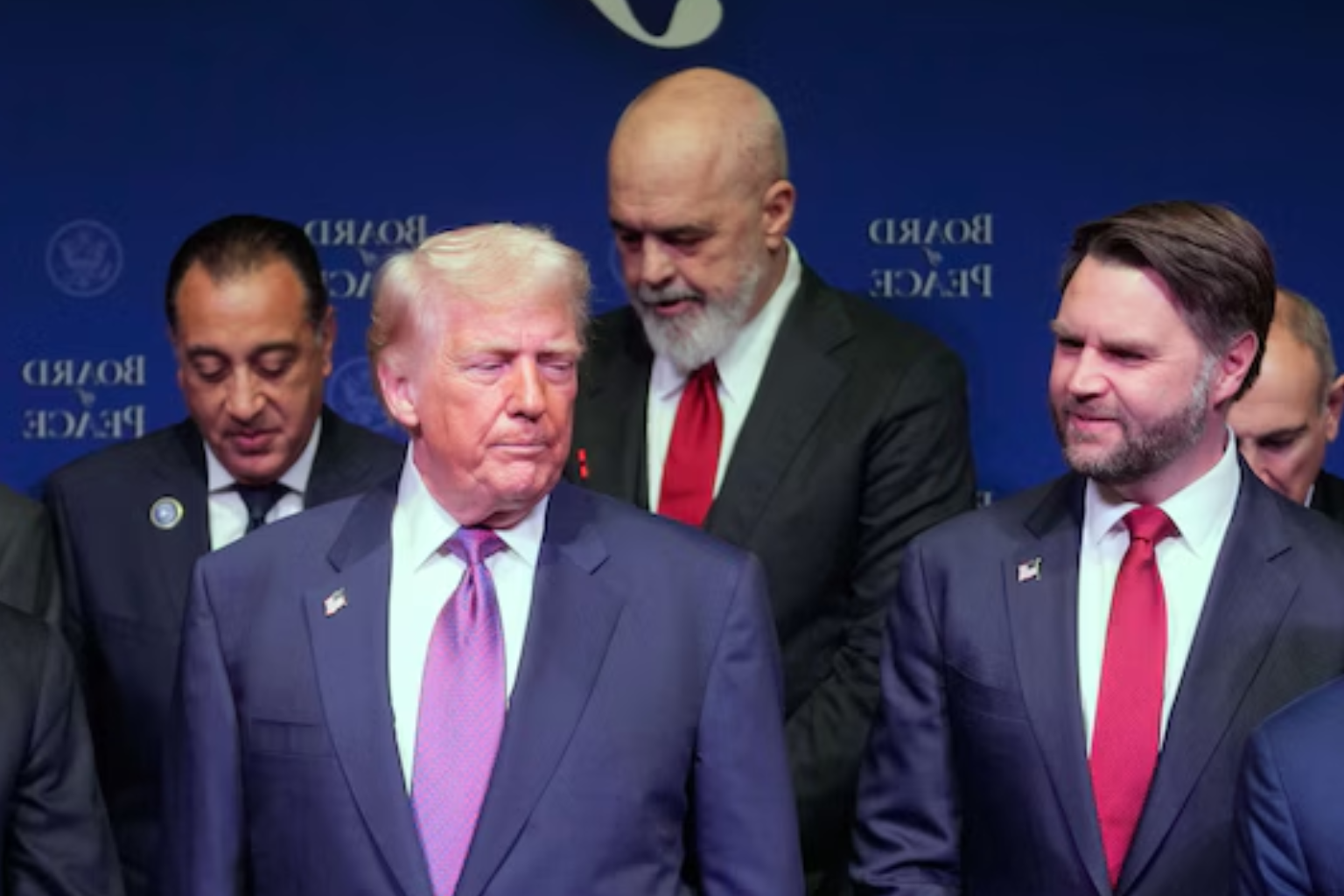
President Donald Trump’s first meeting of his new “Board of Peace” sparked intense social media and political reactions. As detractors and supporters debated its tone and aim, the gathering, which focused on Gaza and possibly other worldwide conflicts, trended online.
Representatives from approximately 50 nations attended. The event announced that 27 nations joined the board and others were observers. Trump launched the proposal as part of his 20-point peace plan to end the Gaza conflict. However, the president has indicated that he will broaden the board’s role to mediate future international conflicts.
Videos of Trump standing with foreign leaders as music played went viral on social media. The scene was seen as unpleasant and unacceptable for a diplomatic context. A “humiliation ritual,” some called the gathering, while others compared it to a private corporate function rather than an international diplomatic forum.
Famous political figures and commentators weighed in online. Political strategist David Axelrod said Trump’s speech tarnished the US’s global standing. Jon Favreau, a former Obama aide, criticized Trump’s comments, suggesting they were meant at non-participating organizations or countries.
In the first minutes of his speech, Trump lauded leaders who joined the program but appeared to blame those who declined. He called some nations “playing a little cute” by not signing on, adding that he would not tolerate such methods. Critics called these words combative rather than diplomatic, sparking internet controversy.
Trump supporters defended the event and hailed his forthright speech despite criticism. Trump’s impromptu address was called a “instant classic” by conservative commentator Eric Daugherty. Supporters said the president’s global negotiations show genuineness and strength.
Financial promises for Gaza relief were made at the meeting. Trump stated that nine nations had given $7 billion to restore the war-torn Palestinian territories. Kazakhstan, Azerbaijan, UAE, Morocco, Bahrain, Qatar, Saudi Arabia, Uzbekistan, and Kuwait pledged finance. The pledged amount is impressive, but it is only a fraction of the projected $70 billion needed for reconstruction.
President announced $10 billion in US assistance for the Board of Peace program. The discussion did not clarify how U.S. cash will be allocated. It is unclear if the cash will go to Gaza reconstruction, board administration, or peace initiatives.
Observers say the board’s goals go beyond Gaza. Trump wants to make the Board of Peace a formidable worldwide platform that can resolve global problems, rivaling established global organizations. Whether the board can effect that much is unknown.
The conference occurred during a shaky ceasefire in Gaza, accelerating reconstruction and diplomacy. The Board of Peace is seen as a new attempt at global leadership, but others dispute its structure and tone for fostering international collaboration.
The strong reactions reflect the political context around Trump’s leadership style. His fans saw strong diplomacy and decisive action. It raised critics’ concerns about tone, presentation, and America’s international image.
Instead of social media reactions, the Board of Peace will likely be judged by actual results like Gaza rehabilitation and international participation. Its first gathering garnered national attention, but with controversy.
Sources:
The Associated Press
Official statements delivered during the Board of Peace meeting by President Donald Trump