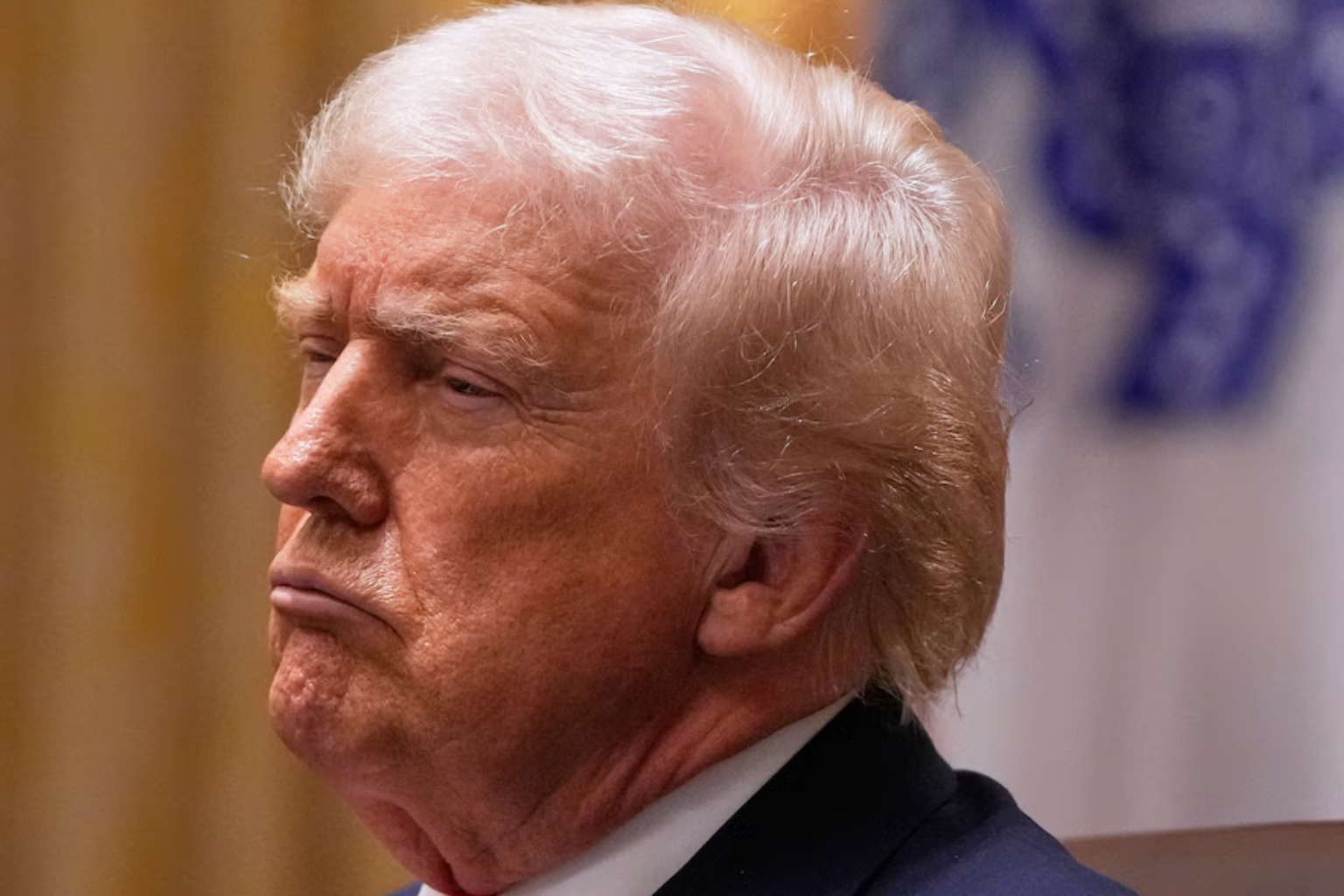
Trump Faces Bipartisan Backlash After Criticizing Pope Leo and Sharing Controversial Post
A fresh political controversy has emerged after former President Donald Trump publicly criticized Pope Leo XIV, triggering strong reactions from Democratic leaders and even some voices within conservative circles. The situation has quickly escalated into a broader debate about respect for religious institutions, presidential conduct, and the tone of political discourse in the United States.
The controversy began when Trump shared a lengthy post on his social media platform, where he sharply criticized the pope’s stance on global issues, particularly in relation to the U.S. military actions involving Iran. In that post, Trump described the pope as weak on crime and ineffective in matters of foreign policy. Alongside these remarks, he also shared an AI-generated image portraying himself in a religious context, which many critics interpreted as inappropriate and offensive.
Democratic leaders were quick to respond, calling the remarks disrespectful and alarming. House Minority Leader Hakeem Jeffries strongly condemned the attack, stating that targeting a global religious figure crossed a serious line. He emphasized that people of faith would not support what he described as an attempt to elevate political authority above spiritual values.
Senator Mark Kelly also voiced strong criticism, highlighting his perspective as a Catholic. He described the comments as deeply troubling, especially given the pope’s position as a central figure for millions of believers. Kelly further linked the controversy to broader concerns about leadership and accountability, arguing that public officials must be mindful of the impact their words can have both domestically and internationally.
The criticism extended beyond general disapproval, with some lawmakers taking more aggressive positions. Representative Pramila Jayapal suggested that the incident raised serious questions about leadership fitness, even calling on Vice President JD Vance to consider constitutional options regarding presidential authority. Other lawmakers described the social media post and accompanying image as inappropriate and concerning, reflecting growing unease within political circles.
The reaction was not limited to Democrats. Some conservative figures also distanced themselves from Trump’s remarks. Notably, criticism emerged from within his broader political base, signaling that the issue had crossed typical partisan boundaries. These responses highlighted concerns about the timing and tone of the comments, particularly as they coincided with a significant religious period.
Public commentary added another layer to the debate. Critics pointed out what they viewed as inconsistencies in how religious values are discussed in politics, especially when compared to past criticisms directed at other political figures. The situation has reignited discussions about the role of religion in political messaging and the expectations placed on national leaders.
Pope Leo XIV responded to the controversy in a measured and composed manner during remarks to reporters. He clarified that his message should not be compared to political rhetoric and emphasized his commitment to the mission of the Church. While expressing disappointment, he maintained a focus on continuing his work and upholding the principles of the Gospel.
This incident has once again highlighted the delicate balance between politics and religion in the United States. It underscores how statements from high-profile leaders can quickly lead to widespread reactions, especially when they involve deeply held beliefs and global institutions. As the situation continues to unfold, it is likely to remain a point of discussion in both political and public spheres.
Sources
The Associated Press
Official public statements from U.S. lawmakers and political figures