New Jersey Congresswoman Faces Federal Charges After ICE Facility Clash Sparks Debate Over Political Bias
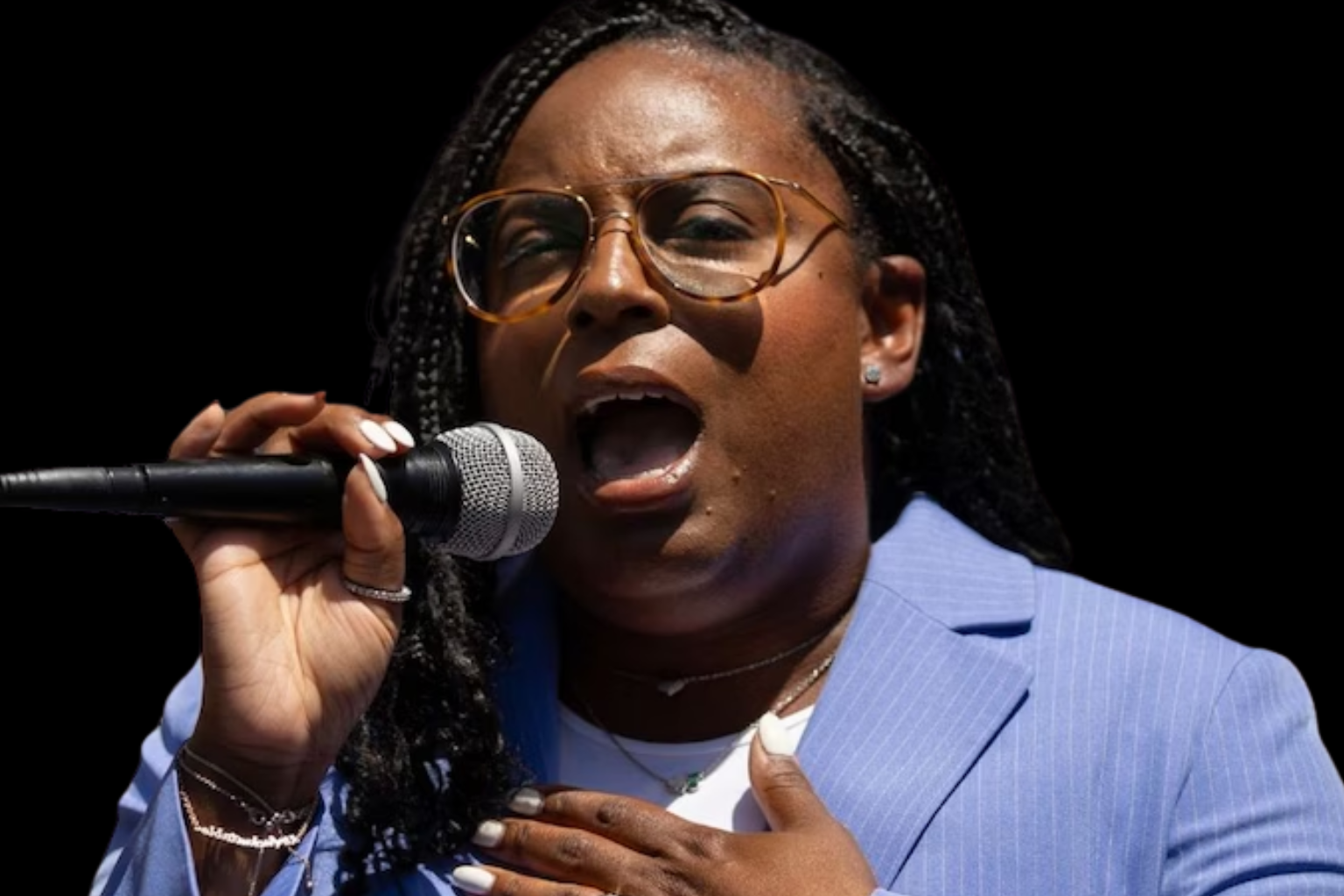
LaMonica McIver, a Democratic U.S. Representative from New Jersey, is facing a serious federal criminal case following an incident at an immigration detention facility in Newark that has triggered a national debate over law enforcement conduct, congressional oversight powers, and claims of political targeting.
The case stems from an event outside Delaney Hall, a privately operated detention center used by U.S. Immigration and Customs Enforcement (ICE). The situation unfolded during an unannounced visit by McIver and other lawmakers after the death of a detainee while in ICE custody. Such visits are typically part of congressional oversight responsibilities meant to monitor federal detention operations.
However, what began as an oversight visit quickly escalated into a chaotic confrontation involving lawmakers, law enforcement officers, local officials, and protesters. According to available video footage from body cameras and facility security systems, tensions rose sharply when federal officers attempted to remove Newark Mayor Ras Baraka from the property, arguing he did not have authorization to remain on-site.
As officers moved to detain Baraka, the crowd surrounding the area became increasingly agitated. The situation developed into a physical and verbal clash near the facility’s gates, with people pushing forward as law enforcement tried to regain control of the scene.
McIver, who was present during the incident, can be seen in recorded footage wearing a red jacket and moving toward the confrontation. The video shows her attempting to intervene during the arrest process, at times being pushed and pushing back in the tightly packed crowd. At one point, she is seen shouting at officers during the escalating exchange, expressing frustration over the arrest and what she described as improper conduct.
Federal prosecutors later alleged that McIver crossed a legal line during the encounter, accusing her of physically interfering with officers performing their duties. The charges include claims that she made contact with federal agents in a manner that obstructed the arrest process. Prosecutors argue that her actions went beyond congressional oversight and entered the territory of unlawful interference with law enforcement operations.
McIver, however, has strongly denied wrongdoing and argues that the prosecution is politically motivated. Her legal team contends that her actions were part of her lawful responsibilities as a member of Congress conducting oversight of a federal facility. They also argue that she is protected under the Constitution’s speech and debate protections, which shield lawmakers from prosecution for actions connected to official legislative duties.
Her defense further claims that the case reflects unequal treatment when compared to individuals involved in the January 6 Capitol riot, some of whom received pardons despite violent conduct. This comparison has become a central part of her legal appeal, which argues that the prosecution is selective and influenced by political bias.
The case has attracted significant attention from civil rights organizations, former federal prosecutors, and members of Congress. Several legal experts who previously worked on high-profile federal cases have joined filings supporting McIver’s appeal. They argue that the prosecution raises serious concerns about the separation of powers and whether the executive branch is using criminal charges to deter legislative oversight.
A bipartisan group of former lawmakers has also expressed concern, warning that allowing the case to proceed could set a precedent that may give the executive branch increased influence over Congress through legal pressure.
Following the incident, Baraka’s arrest was later dropped, and a federal judge criticized aspects of how the arrest was handled. Despite this, federal authorities proceeded with charges against McIver, stating that her conduct during the incident interfered with law enforcement operations.
The Department of Homeland Security previously described the visit as an unnecessary escalation, while McIver’s supporters argue it was a legitimate oversight action that turned volatile due to aggressive enforcement responses.
The case remains under judicial review, with McIver continuing her campaign for re-election in New Jersey’s 10th Congressional District while simultaneously challenging the charges in court. The outcome is expected to have broader implications for congressional oversight authority and the boundaries between legislative action and federal law enforcement powers.
Sources:
U.S. Department of Justice (DOJ)
U.S. Department of Homeland Security (DHS)
U.S. Immigration and Customs Enforcement (ICE)
Federal court records related to United States v. LaMonica McIver case
U.S. House of Representatives rules and congressional oversight guidelines