JD Vance Defends Trump in Clash With Pope Leo, Urges Vatican to Avoid U.S. Policy Debates
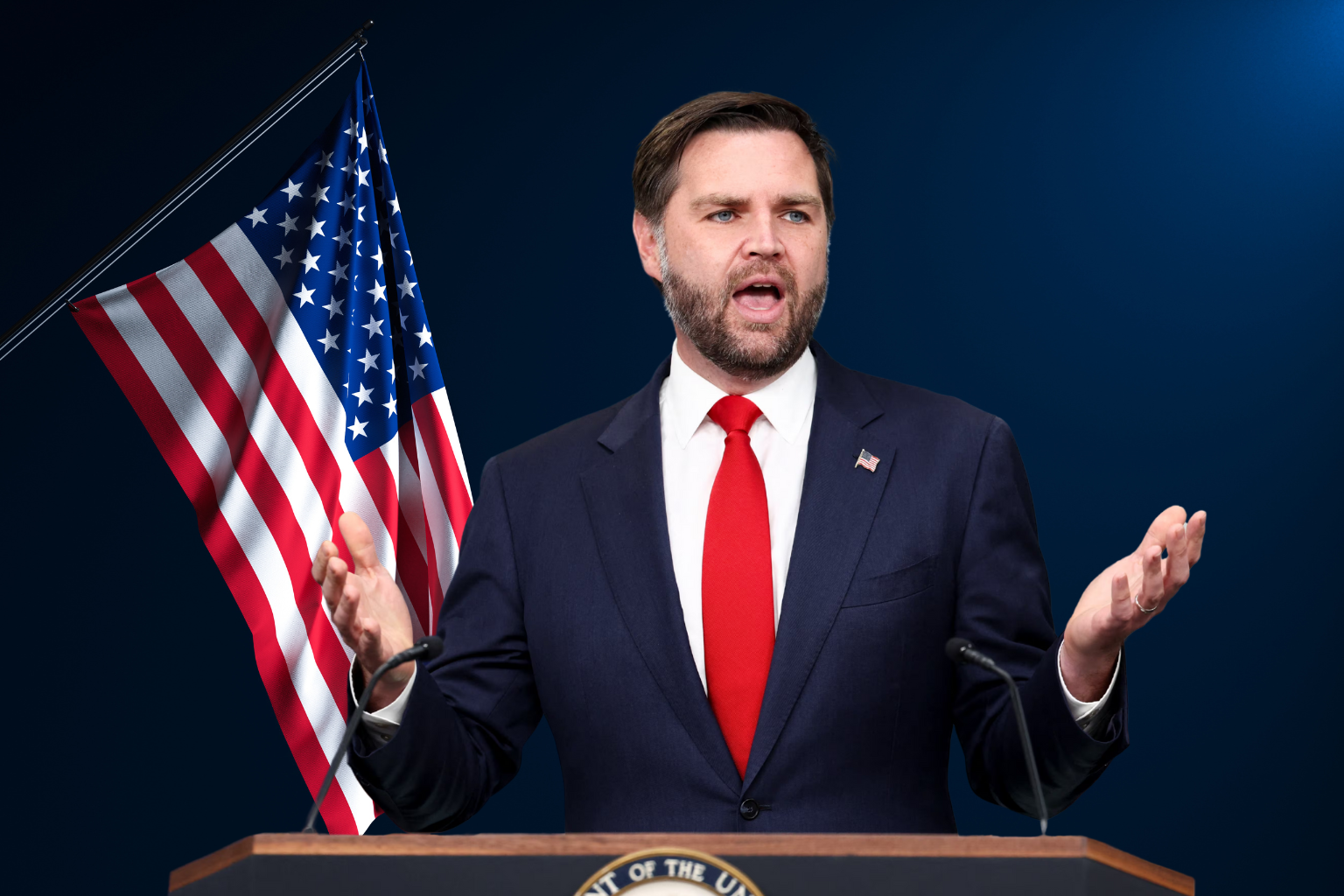
U.S. Vice President JD Vance has stepped into a growing political and religious controversy, backing President Donald Trump after his strong criticism of Pope Leo XIV triggered widespread reactions across the political and religious spectrum.
The dispute began when President Trump publicly criticized the pope’s stance on international issues, particularly comments related to the U.S. military approach toward Iran. In a sharply worded statement, Trump described the pope as ineffective on crime and foreign policy, igniting debate among political leaders, religious figures, and the public.
Responding to the backlash, Vice President Vance defended the president’s position during a televised interview. He emphasized that shaping foreign and immigration policy is the responsibility of the U.S. administration, and that elected leadership must prioritize national interests. According to Vance, differences between political leaders and religious institutions are not unusual and should be expected when both speak on global issues.
Vance further suggested that the Vatican should focus primarily on spiritual and moral guidance rather than direct involvement in political matters. He stated that while disagreements may arise, they are a natural part of the relationship between religious institutions and government authorities. He downplayed the significance of the situation, describing it as a routine difference of opinion rather than a major conflict.
However, his remarks have sparked criticism, particularly from members of the Catholic community and public commentators. Some religious voices argue that issues such as war, peace, and humanitarian concerns fall directly within the moral teachings of the Church, making it appropriate for the pope to speak on them. Others questioned the timing of the political tension, noting that Vance himself has recently been publicly associated with his Catholic faith.
The controversy has also gained traction on social media, where critics challenged Vance’s stance and pointed out perceived contradictions. Some users highlighted that political leaders often engage internationally, raising questions about where the line should be drawn between politics and moral leadership.
Amid the ongoing debate, Pope Leo responded to the situation by reaffirming the mission of the Church. He indicated that his statements are rooted in the teachings of the Gospel and emphasized his commitment to addressing moral issues on a global scale. The pope made it clear that he intends to continue speaking on matters he believes are central to the Church’s role in the modern world.
The situation reflects a broader and longstanding tension between political authority and religious influence, especially when both address global conflicts and humanitarian concerns. While the White House maintains its focus on national policy decisions, the Vatican continues to position itself as a moral voice on international issues.
As discussions continue, the exchange highlights the complex balance between governance and faith, and how public disagreements between powerful institutions can shape both political discourse and public opinion.
Sources:
Fox News
The Associated Press
Public statements from U.S. officials and Vatican representatives