Drivers Push Back as NY and NJ Lawmakers Move to Curb Rising Toll Penalties
As lawmakers in both New York and New Jersey take action against what they see as exorbitant toll violation fees, the frustration of regular drivers is rising. The existing system, which many believe unfairly punishes drivers for small, one-time errors, is being reformed by a new bipartisan initiative.
Administrative fines, which frequently considerably exceed the initial toll payment and sometimes approach $50 per infraction, are at the heart of this problem. Paul Kanitra and Monica Martinez claim that these costs are putting an unwarranted financial strain on drivers who only occasionally make mistakes and are not repeat offenders.
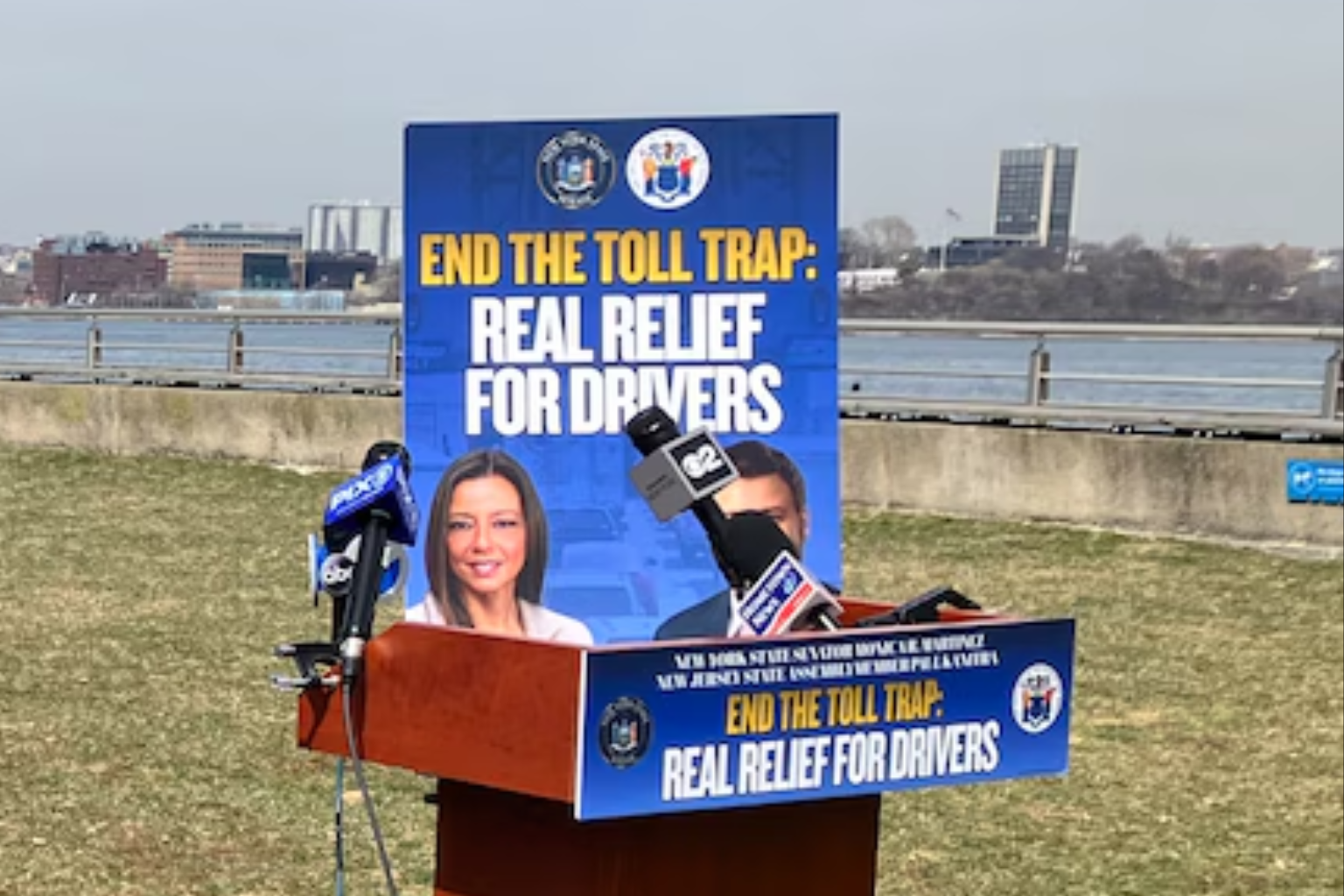
A bistate task committee and proposed legislation are part of the cooperative initiative that the two politicians just unveiled. Their objective is to improve the toll enforcement mechanisms that many locals depend on on a daily basis by making them more equitable, transparent, and accountable. They stressed that the problem impacts drivers on both sides of the Hudson River and calls for a coordinated solution while speaking close to the Holland Tunnel.
The issue arises from an increasing number of complaints from drivers claiming that minor toll problems, including a missed scan or an inactive transponder, resulted in them being charged with hefty costs. Senator Martinez talked on her personal experience, describing how a system error caused a $2 toll to become a $52 bill. Lawmakers contend that situations like this draw attention to more serious issues with the tolling system.
Approximately 7 million toll violations were issued in New Jersey alone between July 2020 and July 2025, according to data examined by officials. Only 20% of individuals were repeat offenders, whereas over 80% were associated with infrequent drivers. This suggests that drivers who are not purposefully evading toll payments are the ones receiving the majority of fines.
The proposed “End the Toll Trap” law aims to correct this disparity by placing the financial burden on repeat offenders rather than first-time offenders. Administrative fees would not be imposed under the scheme unless a driver violates the law at least three times in a 60-day period over a 90-day period. The initial toll sum would still need to be paid by drivers.
A new mechanism for calculating administrative fees is also mandated by the Act. The procedure would be more proportionate and data-driven if fees were determined by the total cost of the system and the number of repeat offenders rather than a fixed rate.
The creation of a 12-person task team of specialists and legislators from both states is another crucial component of the effort. This team will thoroughly examine the existing tolling system with an emphasis on increasing effectiveness, cutting expenses, and investigating viable remedies such amnesty programs for drivers with unresolved infractions. Within two years, the task force is supposed to produce a comprehensive report.
Legislators think that technological advancements, including as artificial intelligence and license plate recognition systems, should make toll processing more cost-effective and efficient than it was in the past. They contend that rather than raising driver fees, these enhancements ought to result in reduced administrative expenses.
Toll enforcement is not a recent problem. The administrative charge in New Jersey was raised from $25 to $50 in 2011. Drivers filed a lawsuit in 2017, but it was eventually rejected in 2022 after the court determined that the price represented the expense of handling infractions. Officials now contend that the current price structure is out of date because technological developments have drastically decreased such costs.
Additionally, the proposed reforms would mandate that toll agencies release yearly reports that include important information about total infractions, repeat offenders, revenue received, and operating expenses. This measure, according to lawmakers, is crucial to enhancing openness and rebuilding public confidence.
Even though the bill is still being reviewed, it has already spurred a larger discussion about toll enforcement fairness. Because the idea is still ongoing, representatives from organizations like the New Jersey Turnpike Authority and the Port Authority of New York and New Jersey have declined to comment.
To avoid infractions, transportation authorities nevertheless advise drivers to keep their E-ZPass accounts valid, make sure their license plates are correctly registered, and update their payment methods.
Millions of drivers who rely on toll highways, bridges, and tunnels throughout the region may be greatly impacted by the outcome of politicians’ reform initiatives. The proposed modifications seek to provide a more equitable system that protects regular drivers from costly errors while holding repeat offenders accountable.
Sources
New Jersey Legislature
New York State Senate
Port Authority of New York and New Jersey
New Jersey Turnpike Authority