Trump Says His Own Judgment Defines the Limits of Presidential Power
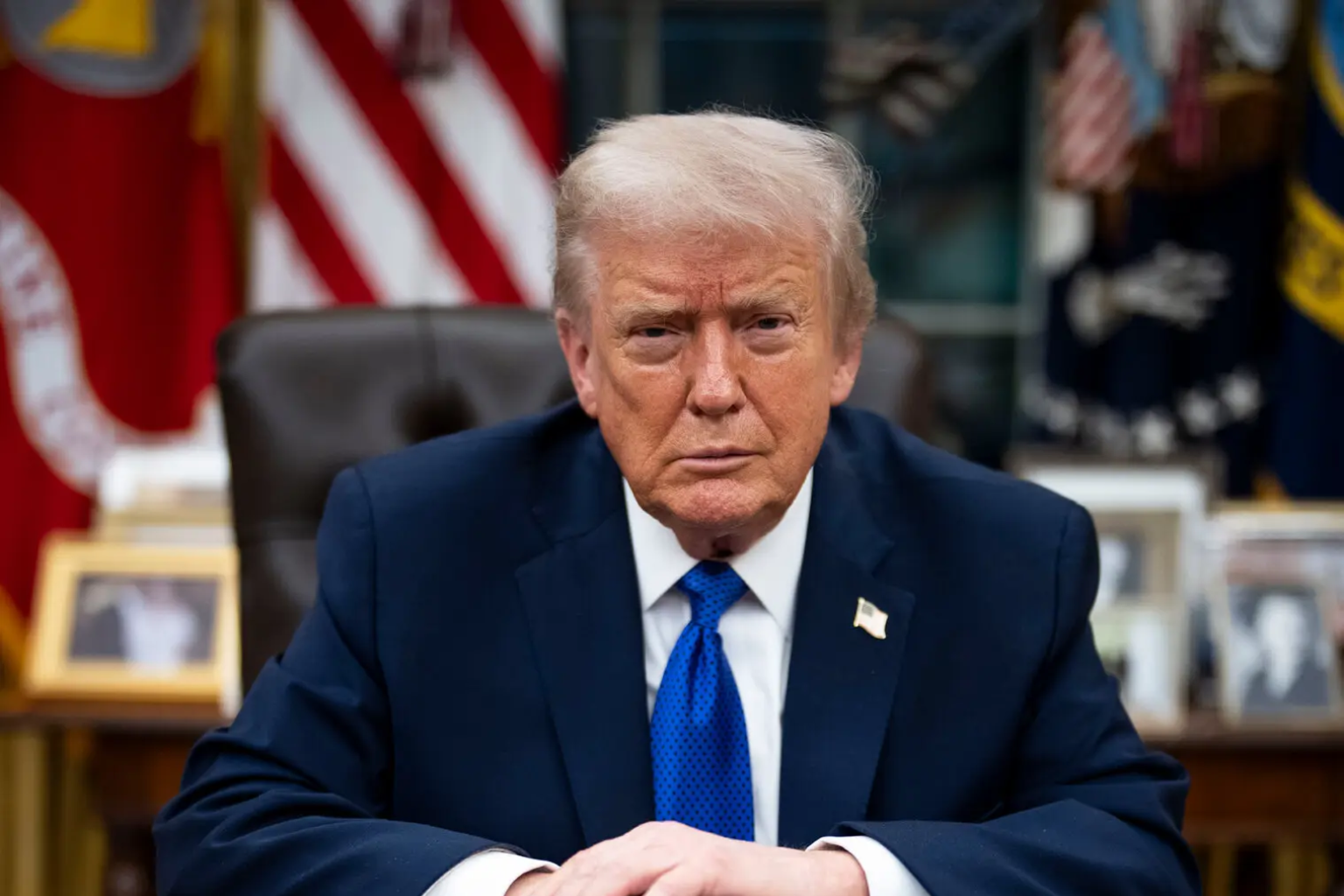
President Donald Trump has stated that his activities as commander in chief are restricted by his morality and judgment, not international law or global accords. The president’s comments in a lengthy interview reveal his views on American military, economic, and political dominance abroad.
When asked explicitly if he may strike, coerce, or intervene in other countries, President Trump responded the only limit is himself. He suggested that external rules, including international law, do not influence his judgments. He later indicated that he follows international law, but he believes the US controls when and how those standards apply.
National power is prioritized over treaties, long-standing relationships, and global conventions in this viewpoint. The Trump claims past administrations were too cautious and failed to fully deploy American might for national advantage. In contrast, he defined his style as straightforward, strong, and fearful of military action or threat of it with other nations.
At home, President Trump acknowledged constitutional and institutional restrictions on his authority. He maintained his combative approach to institutions and political opponents he considers obstructionists. He continued to deploy federal soldiers, including the National Guard, despite state and municipal opposition. These efforts are needed to maintain order and enforce federal authority, he says.
The president promoted uncertainty as a strategy abroad. Some leaders take his warnings seriously because they believe he will respond quickly and decisively. He accepted a call from Colombian President Gustavo Petro, who was concerned by frequent U.S. military talk in the region. The interaction showed how the idea of potential force may affect diplomatic conversations without direct action.
President Trump also cited recent foreign policy choices to support his approach. He proudly referred to a U.S. strike on Iran’s nuclear program as a success and had a miniature of the aircraft on his desk. He also noted rapid action against Venezuela’s government and revived interest in Greenland, a strategically significant Danish region tied to NATO.
The president did not respond whether keeping NATO or gaining Greenland was more important, implying that the US may face a choice. He hinted that NATO’s strength depends on U.S. leadership and that it has little value without it.
President Trump rejected the premise that other global powers should follow the post–World War II international order, even though he found many of its parts obsolete or cumbersome. He doubted this criteria would apply to leaders like China’s Xi Jinping or Russia’s Vladimir Putin, underscoring his notion that U.S. influence is unique in world affairs.
The president’s words are one of the clearest descriptions of America’s global role. His emphasis on strength over norms and personal judgment over shared legal frameworks is unusual in diplomacy. This position is seen as an essential statement of national sovereignty, but detractors say it could threaten international stability and long-standing partnerships. How this mindset is translated into policy will be a key challenge for US friends and enemies as global tensions rise.