
Salon Illness Concerns, Religion in Everyday Conversations, and Concert Etiquette: Miss Manners Offers Practical Advice
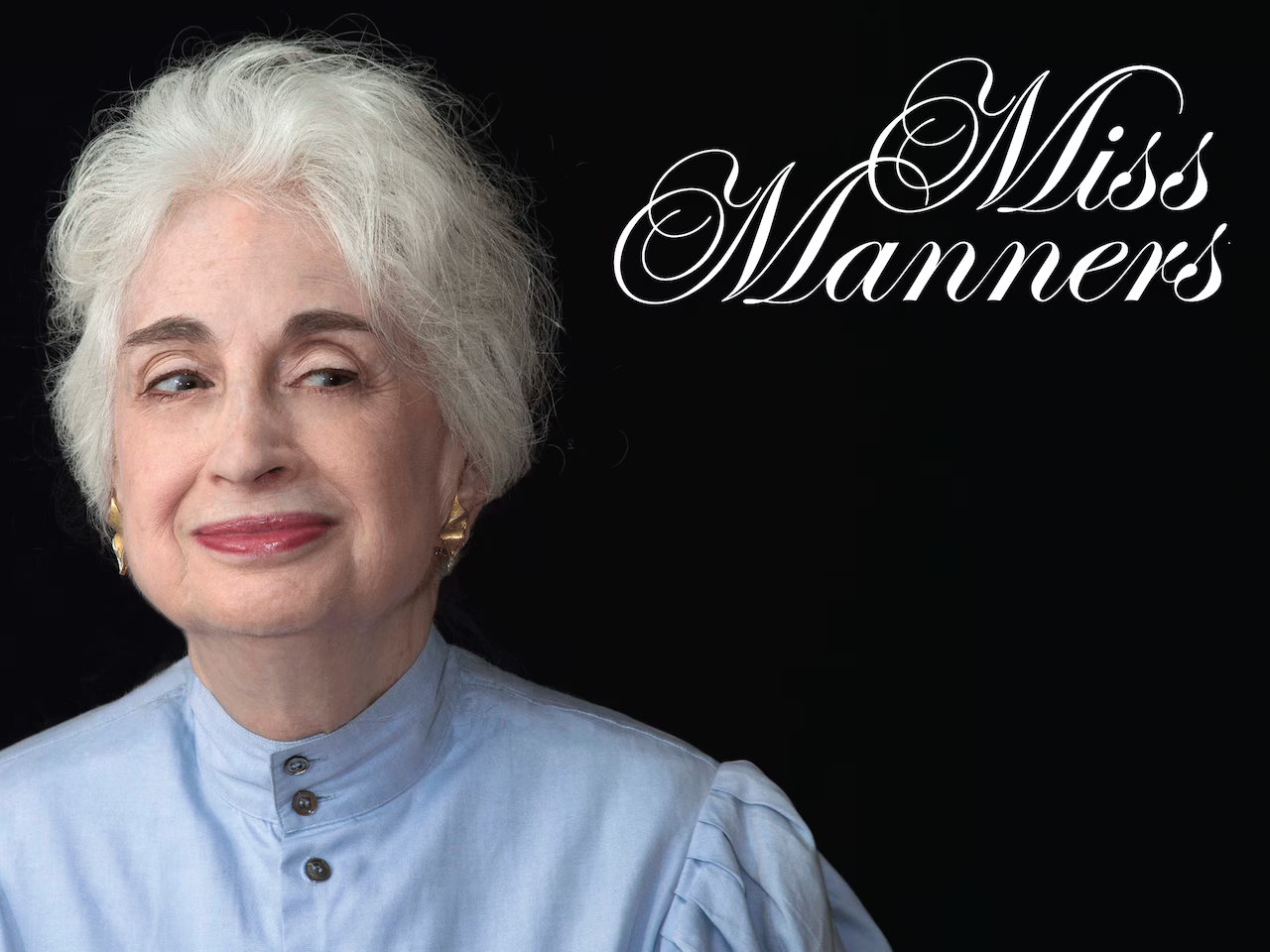
Everyday situations can leave people wondering what the polite or appropriate response should be. From worrying about getting sick at a hair salon to handling unexpected religious comments in casual conversations and understanding proper behaviour at a symphony, these common experiences often raise questions about etiquette. In a recent advice column, etiquette expert Miss Manners addressed these concerns by offering thoughtful guidance focused on respect, consideration, and good communication.
One reader shared concerns about becoming ill after a recent visit to a hair salon. The individual explained that while getting their hair washed, several salon employees were coughing and sneezing nearby. Shortly after the appointment, they developed what turned into a fairly serious cold. Although they could not be completely certain the illness came from the salon, the timing made them suspect they had been exposed there.
The reader said they regularly take precautions to protect their health, including staying up-to-date on vaccinations and wearing a face mask while travelling on aeroplanes. However, they pointed out that wearing a mask during a haircut is often impractical, leaving customers with fewer ways to protect themselves.
Looking ahead to their next salon appointment, the reader wondered whether they should bring up the experience. At the same time, they wanted to avoid sounding like they were blaming specific employees or creating unnecessary conflict.
Miss Manners advised that if the customer chooses to raise the issue, the conversation should be handled privately with the salon owner or manager rather than mentioning it directly to staff members. Speaking privately allows the customer to express concerns about workplace health practices without embarrassing any individual employee.
The advice also acknowledged that opinions about illness prevention have changed considerably in recent years. While people may disagree on the lessons learned from recent public health events, the basic principles of courtesy remain unchanged. Customers who have concerns about health and safety should communicate respectfully, and businesses should be mindful of creating a comfortable environment for both employees and clients.
Another reader asked about a different type of social discomfort. They noticed that some people frequently introduce statements such as, “I’m a Christian, and…” during conversations that have nothing to do with religion. According to the reader, these comments often appear during discussions about completely unrelated topics, making the conversation feel awkward and distracting.
The concern was not directed at religious belief itself but at the habit of bringing personal faith into ordinary discussions where it has little connection to the subject. The reader questioned when this practice had become so common and why it seemed to be used as support for opinions that had nothing to do with religion.
Miss Manners responded by noting that etiquette has traditionally discouraged introducing highly personal subjects like religion or politics into general conversation because they can easily create tension or divide people. Conversations are often more productive when participants stay focused on the topic being discussed rather than shifting attention to deeply personal beliefs.
At the same time, Miss Manners observed that sharing religious beliefs has existed throughout history and is not a modern development. However, using faith as a way to strengthen opinions on unrelated everyday matters is something that may leave others feeling uncomfortable, especially when the discussion has nothing to do with religion.
The final question centred on etiquette during classical music performances. A long-time symphony attendee explained that audience members often seem divided over whether to applaud between the different movements of a musical work.
Traditionally, concert etiquette encourages listeners to wait until an entire piece has been completed before applauding. However, the reader noticed that many people now clap after each movement, creating an uneven response where only part of the audience applauds while others remain silent.
The reader wondered whether orchestras should educate audiences before performances by making announcements about expected etiquette or whether the custom itself should simply be reconsidered.
Miss Manners answered with a touch of humour before addressing the question more seriously. While acknowledging that some orchestras already provide etiquette guidance through concert programmes or announcements, she suggested that the traditional practice still has value.
At the same time, she emphasized that audience members who applaud between movements are often responding naturally to the emotion of the performance rather than intentionally ignoring etiquette. Because of that, longtime concertgoers should be willing to show understanding instead of judging those who may not be familiar with classical music traditions.
The broader message across all three questions is that etiquette is less about rigid rules and more about showing respect for others. Whether discussing health concerns with a business, navigating sensitive conversations, or attending cultural events, thoughtful communication and consideration remain the foundation of good manners.
As everyday social situations continue to evolve, etiquette experts suggest that kindness, discretion, and patience often provide the best path forward. Rather than assuming bad intentions, approaching situations calmly and respectfully can help prevent misunderstandings while maintaining positive relationships in both personal and public settings.
Sources
- Miss Manners (Official Website)
- Andrews McMeel Syndication